
The Ultimate Guide to Visiting Wanuskewin Heritage Park
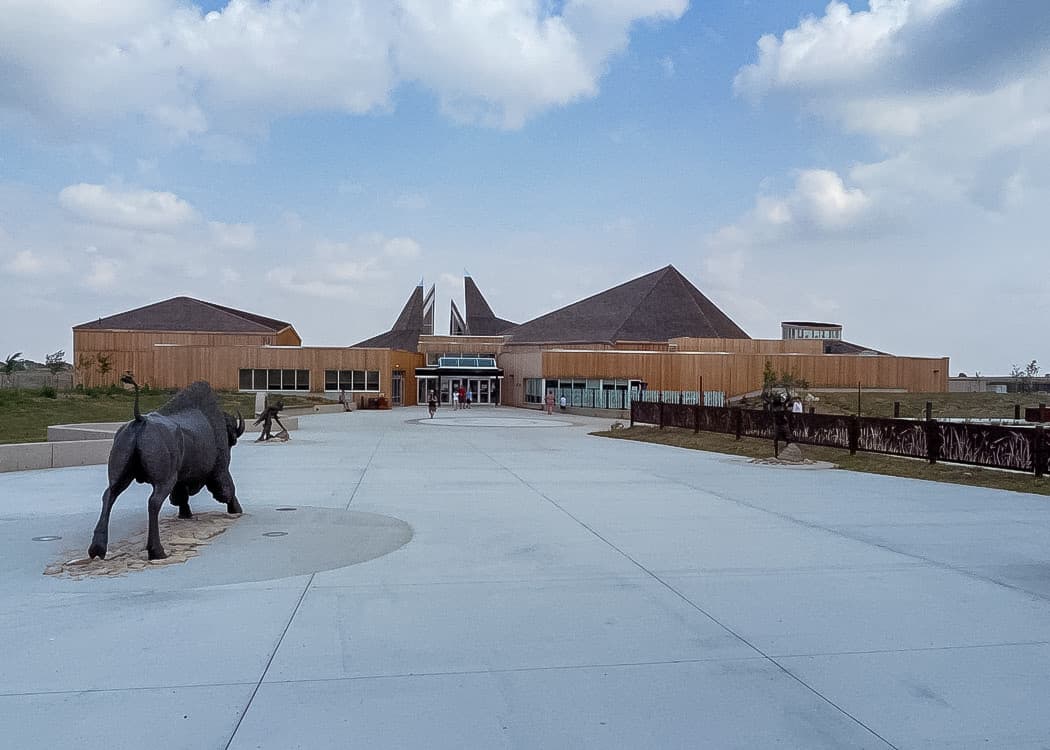
Wanuskewin Heritage Park
During our trip to Saskatchewan, we wanted to visit an attraction where the kids could learn about the local Indigenous communities. Wanuskewin Heritage Park was suggested to us by the locals, as a place where we would not just learn about the customs, but be able to experience the rich culture in a hands-on way.
Where is Saskatchewan Located?
Saskatchewan is located to the east of Alberta and to the west of Manitoba. The province sits to the north of both Montana and North Dakota, and to the south of the Northwest Territories. As a result, Saskatchewan is one of only two landlocked provinces in Canada.
How Do You Get to Saskatchewan?
Getting to Saskatchewan By Car
If you are planning on driving to Saskatchewan from elsewhere in Canada, the easiest way to get there is via the Trans-Canada Highway. The highway will bring you into Saskatchewan from either the east or west.
If you are coming from the US, there are 12 border crossings into Saskatchewan, from North Dakota and Montana.

There are public transit buses in Saskatchewan which connect major cities and towns. But having your own vehicle is definitely the best way to explore this province.
Getting to Saskatchewan by Plane
Saskatchewan is home to two international airports; Saskatoon John G. Diefenbaker International Airport and Regina International Airport (YQR). These airports are easily accessed from other Canadian airports. But due to their small size, they only service a select few other destinations.
Both airports, however, offer rental car services. This makes it easy to grab your own transportation before heading out to explore the province.
When is the Best Time to Visit Saskatchewan?
Keeping in mind that many of Wanuskewin’s attractions are outdoors, may help you decide which season is best to visit. But keep in mind, Saskatchewan has some pretty extreme weather!
Summers are usually warm, dry, and sunny. Temperatures normally range from 15 C (60 F) in May, to the mid-30s C (90-95 F) in July and August. The evenings, however, tend to be cooler.
And although Saskatchewan is prone to frequent thunderstorms, the summer months are the most popular time to visit. Not only is the weather at its most predictable, but the greatest number of attractions are open at this time of year.

Late Spring and early Fall also tend to be nice times to visit Saskatchewan. The weather is not as hot, but still very comfortable for sightseeing.
Of course, if you are willing to brave an extreme winter (the coldest temperature recorded in Saskatchewan was −56.7 °C or −70.1 °F), then you may want to visit between November and March when crowds are at their lowest.
Where is Wanuskewin Heritage Park Located?
Wanuskewin Heritage Park is conveniently located just 15 minutes from the Saskatoon International Airport. It is also a 15-minute drive from downtown Saskatoon.
If you are driving to Wanuskewin from Regina, it is just under a 3-hour drive north.

To access the park by car, simply follow the Bison signs. The park is located South of Penner Road. Unfortunately, you will not be able to travel to the park by way of public transit.
If you are interested in hiking or biking to Wanuskewin, the park is now connected to the Meewasin Valley Trail.
Address: RR #4 Penner Road, Saskatoon, SK, S7K 3J7, Canada
Hours and Admission
Tues-Sun: 10 am – 5 pm, Mon: closed
Admission:
Adult (18 – 64) – $14.00
Children (6-17) – $8.00
Family (Parents & Dependents) – $35.00
Parking: $5 flat rate for the day
What Does the Word Wanuskewin Mean?
The word Wanuskewin comes from the Cree language and means “being at peace with oneself.” Cree is actually the second most common unofficial language spoken in Saskatchewan.
What is the History of Wanuskewin?
The Indigenous peoples of the Northern Plains made a yearly trek to Opimihaw Creek. Not only were they following the bison and range animals, but they were gathering the plants of the prairies. Their way of life evolved to suit their environment.
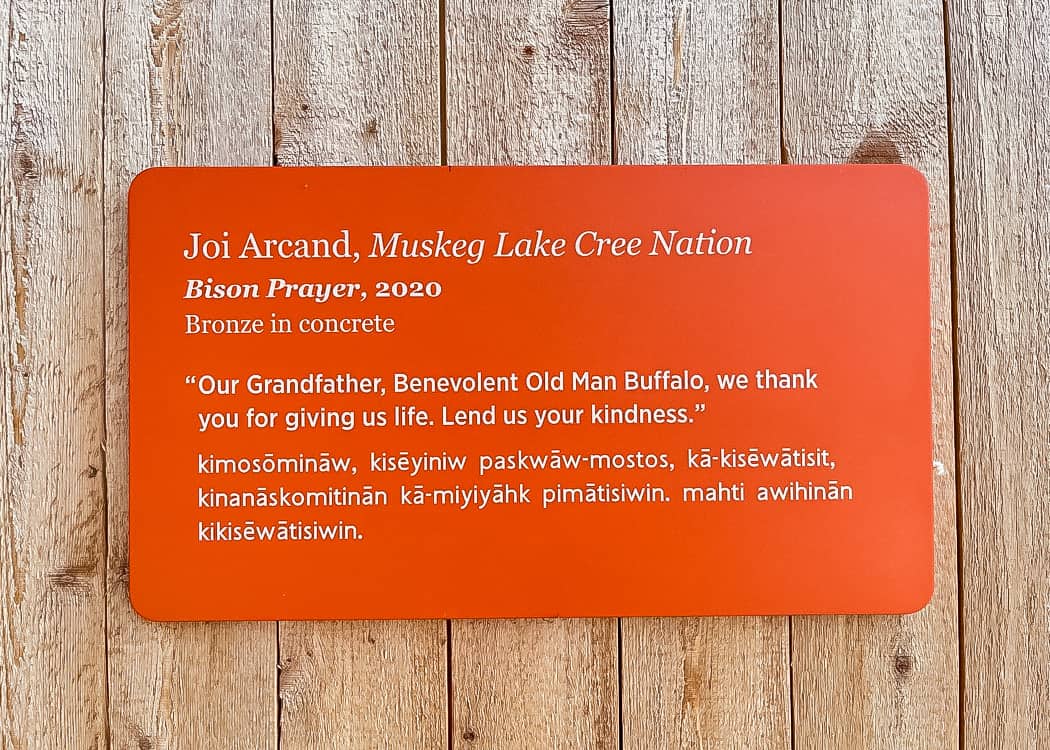
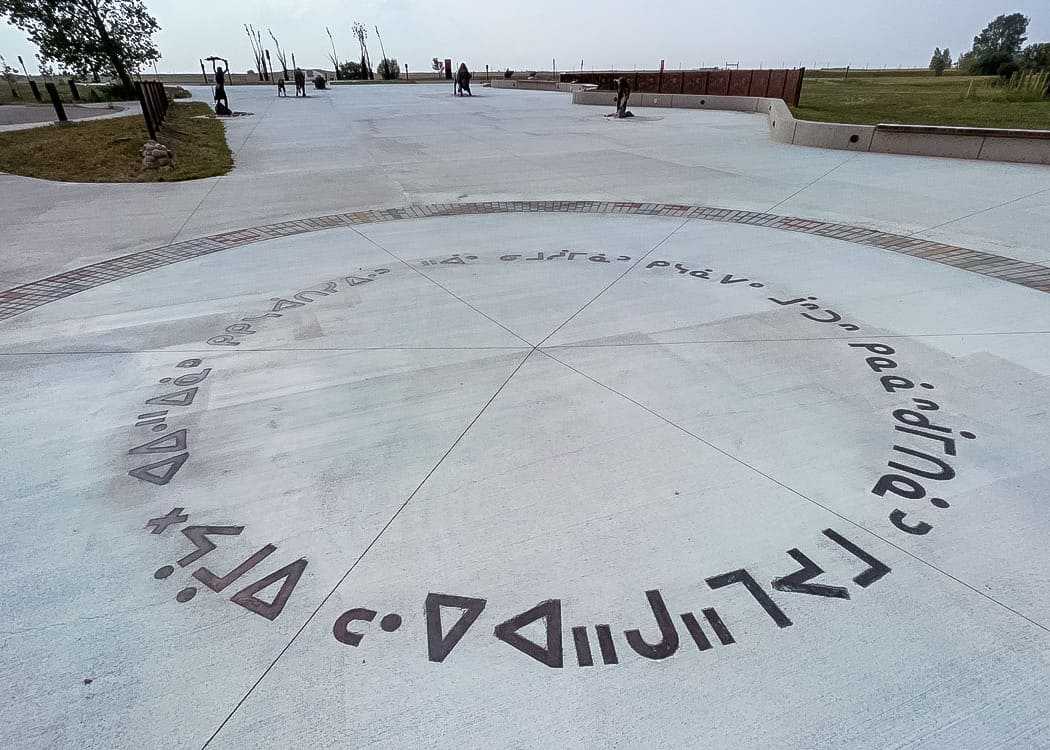
Today, Wanuskewin encourages visitors to delve into the past, and discover what life was like for these nomadic hunter-gatherer peoples.
What is the Archeological significance of Wanuskewin Heritage Park?
Wanuskewin is Canada’s longest-running archaeological dig. There are 20 archaeological sites, which represent nearly 6000 years of cultural history relating to the Northern Plains First Nations Peoples.
Researchers have been unearthing treasures since the 1970s. Today, you will still find several active dig sites, where students from the University of Saskatchewan can be found working.
What is completely incredible to learn, is that many of these sites pre-date the pyramids of Egypt. These sites provide valuable clues to the daily existence of the early Plains Peoples.

Items such as tipi rings, stone cairns, pottery fragments, plant seeds, projectile points, eggshell fragments, and animal bones, all paint a picture of the active and thriving societies that lived in the area thousands of years ago.
And although researchers have been able to put together a remarkably complete and intact record of cultural development in the region, some sites, like the ancient Medicine Wheel, remain shrouded in mystery.
Things to Do at Wanuskewin Heritage Park
There are many family-friendly things to do a Wanuskewin Heritage Park. Whether you are looking to enjoy the outdoors, see some incredible artifacts, or watch a cultural performance, you have definitely come to the right place!
1. Learn About Local First Nations Culture
Wanuskewin Heritage Park is an amazing place to learn about the culture of the Indigenous Peoples. The main exhibit hall contains a diverse array of presentations spanning archaeological beginnings through contemporary First Nations culture.
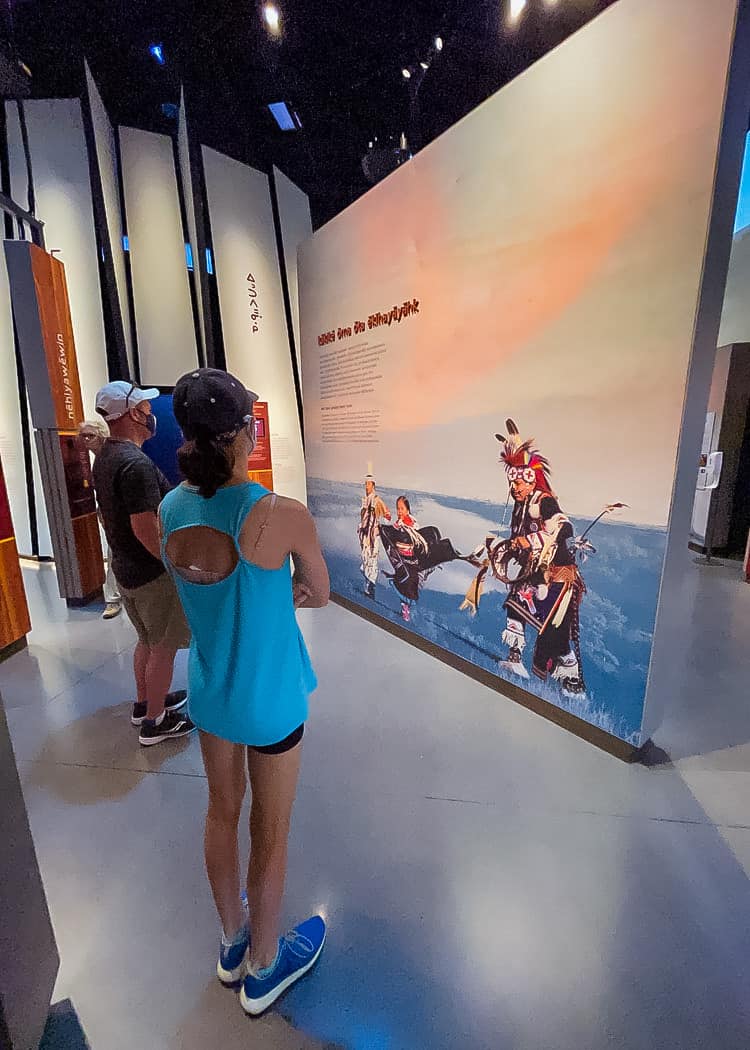

There are tons of artifacts and displays showing the everyday life and skills of the People of the Northern Plains.
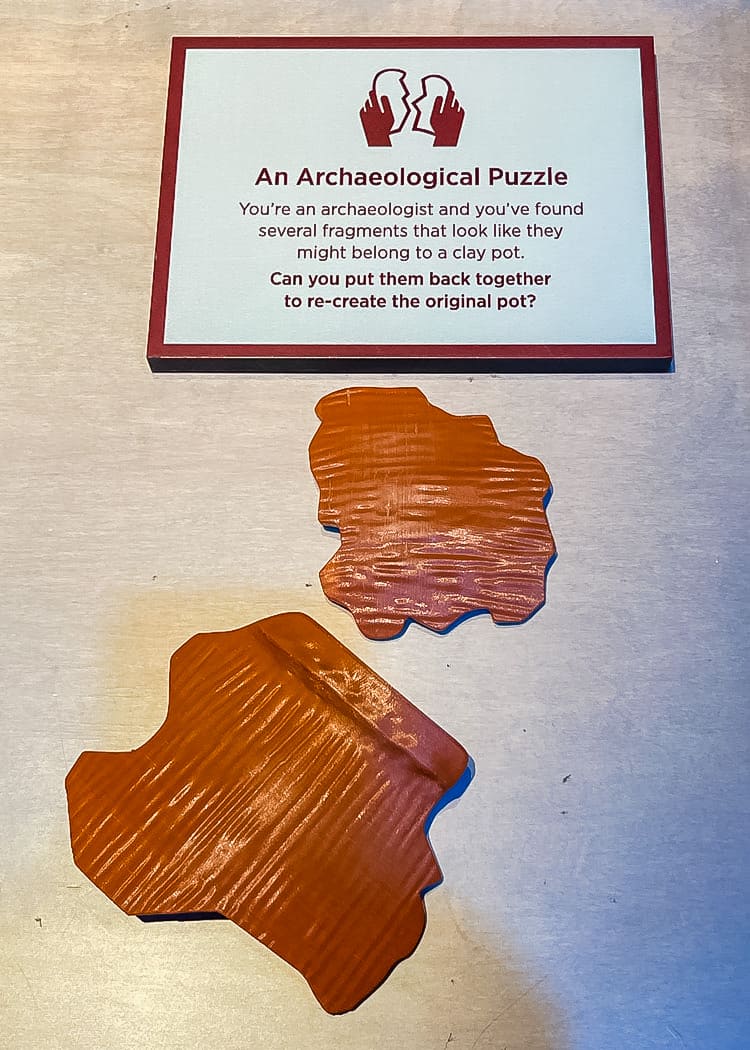
The kids loved looking at the archeological exhibits showing how objects are removed during a dig, cleaned, and assembled. There is even a hands-on game where you are challenged to assemble shards of pottery to make an urn.

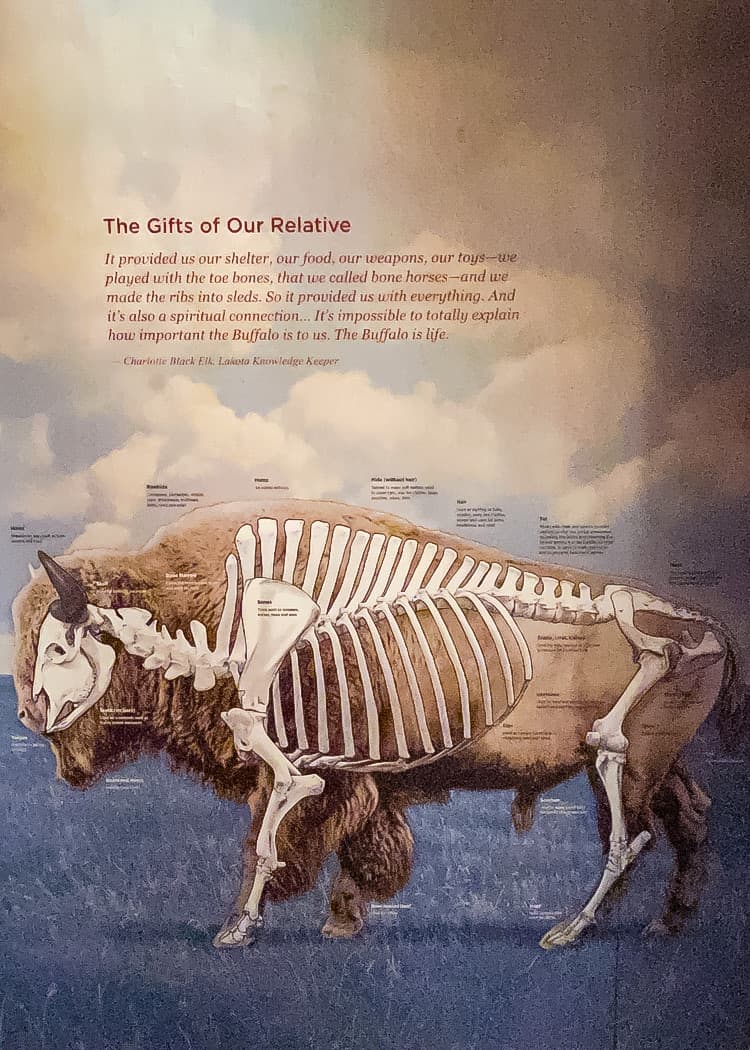
Learn how the Plains people hunted Bison, their tools, and how they processed the animal. Study a large chart showing the parts of a Bison, what everything was used for, and how no part of the animal was wasted.
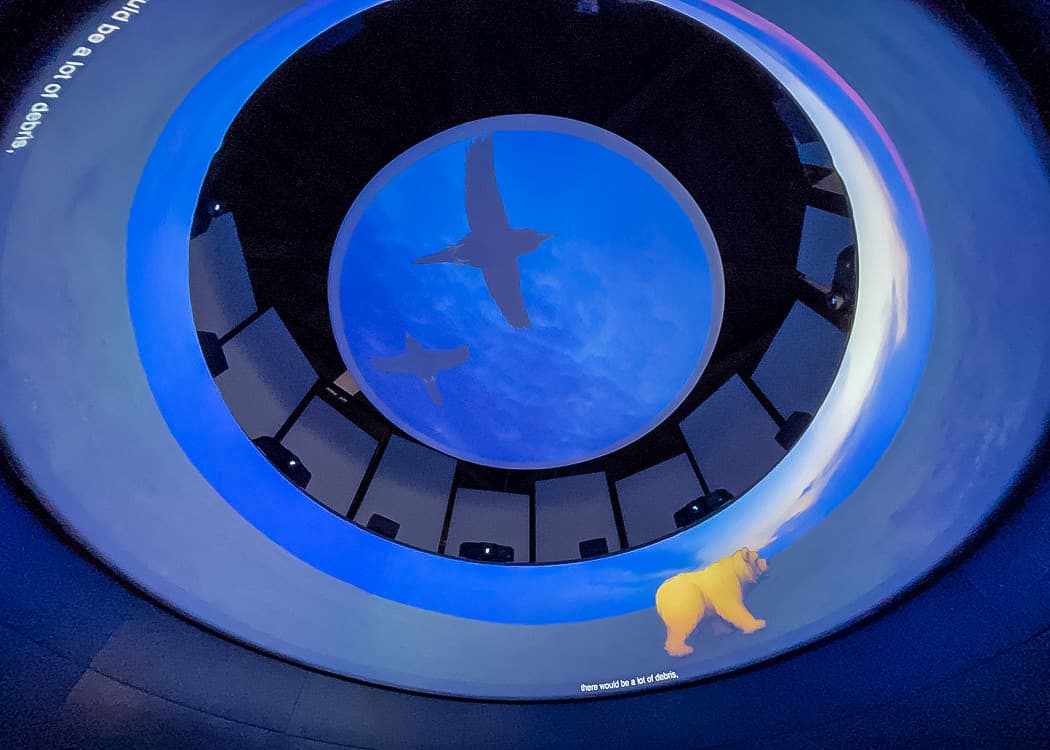
Sit in the astronomy theatre and learn the traditional stories behind some of the most popular constellations. The kids were familiar with a couple of these stories, as we had learned them during our Stargazing Night Hike while camping on Manitoulin Island.
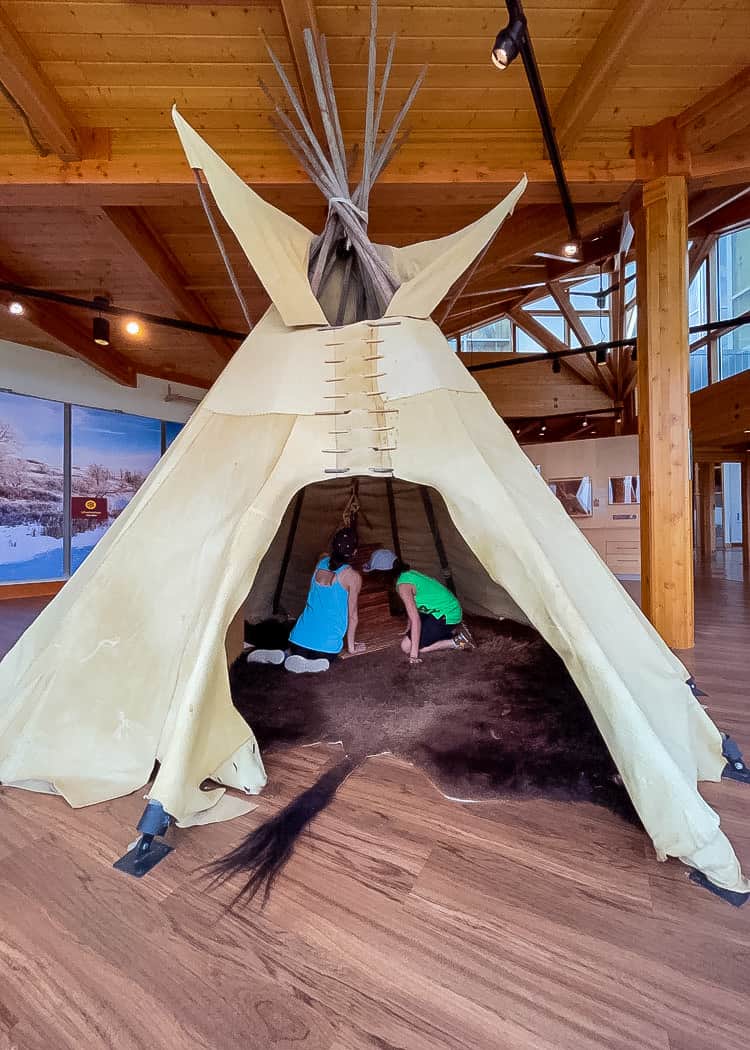
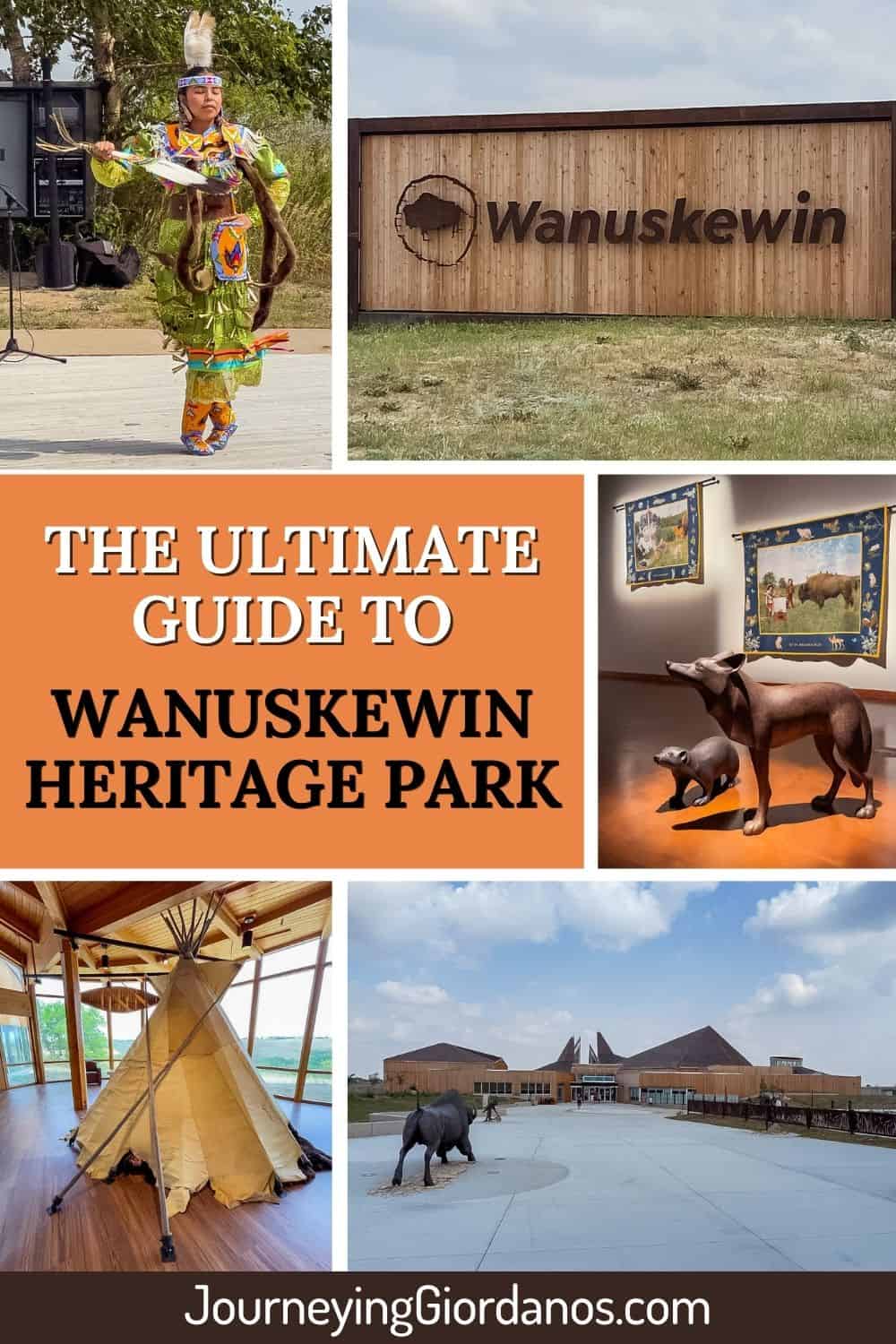
In the main lobby, you will find a traditional Tipi. The kids enjoyed crawling inside and looking at how the Tipi was constructed, what it was made from, and what animal skins were placed inside for warmth and comfort.
2. Go For a Nature Hike
When you visit Wanuskewin Heritage Park, make sure to take advantage of the many hiking trails found on the property. The hiking trails are free to use, however, you just have to pay to park in the lot if you arrive by car.


The Trails range in length from .4 km to 2.1 km and will take you anywhere from 15 minutes to one hour. The trails are family-friendly, relatively flat, and quite easy.

3. Try Some Indigenous Cuisine
Wanuskewin Heritage Park has a wonderful on-site restaurant, which is available for dine-in or take-out meals. The menu is a mix of traditional Indigenous and contemporary cuisine.
With items that include bison, plant-based burgers, bison and vegan soups, daily fresh baked bannock, and their signature Bison Blend Coffee, you are sure to find something you will love.
4. Take a Guided Tour
When you arrive at Wanuskewin, be sure to check the list of scheduled guided tours that are available for that day. There are usually several to choose from, ranging in time from about 1 to 2 hours long.
Wanuskewin is rich in both history and culture. The tours will tell the stories of the nomadic tribes who travelled through the Northern Plains to hunt bison, gather food and herbs, and escape the winter winds.
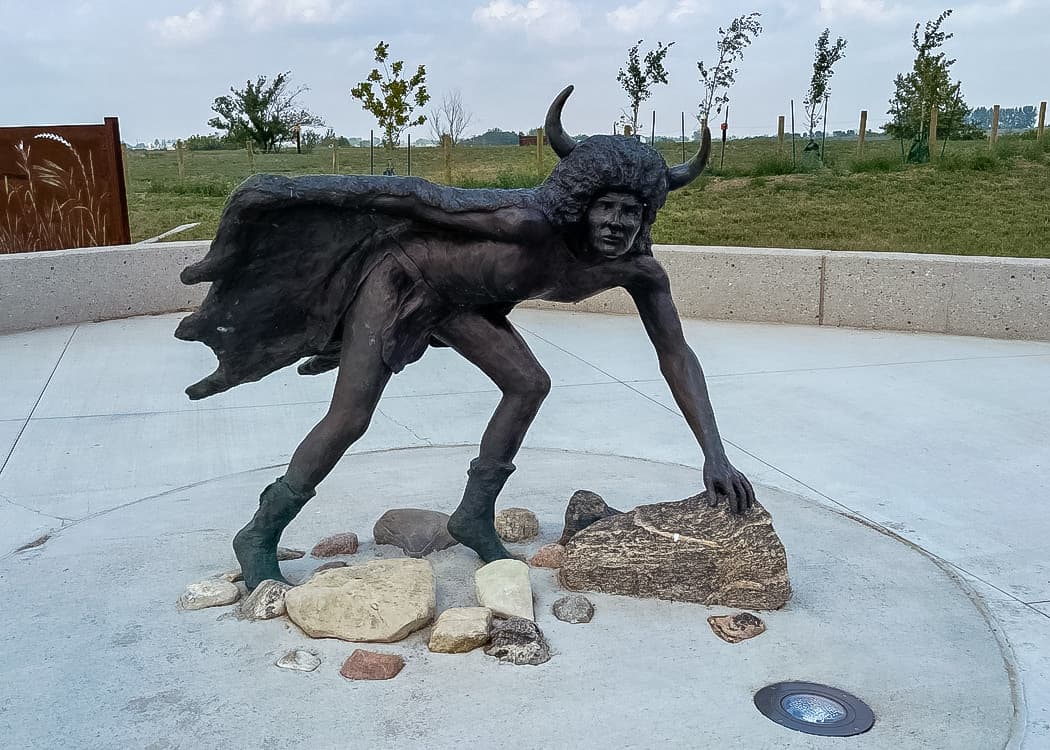
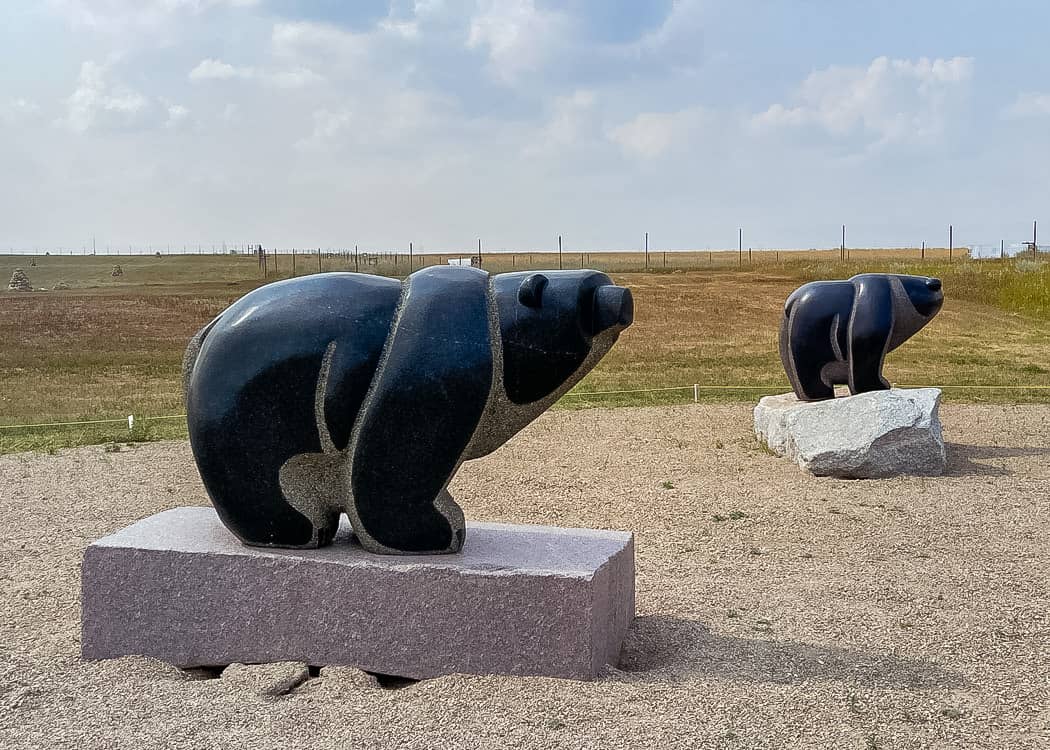
You will walk in the footsteps of the Northern Plains Peoples, as you learn why this site was a place of worship and celebration, and why a deep sense of spirituality still exists today.
We were lucky enough to have a very knowledgeable tour guide give us a private Bison Walk tour. The guide explained how millions of bison once roamed the Central and Northern Plains, and how Indigenous peoples depended upon them for survival.

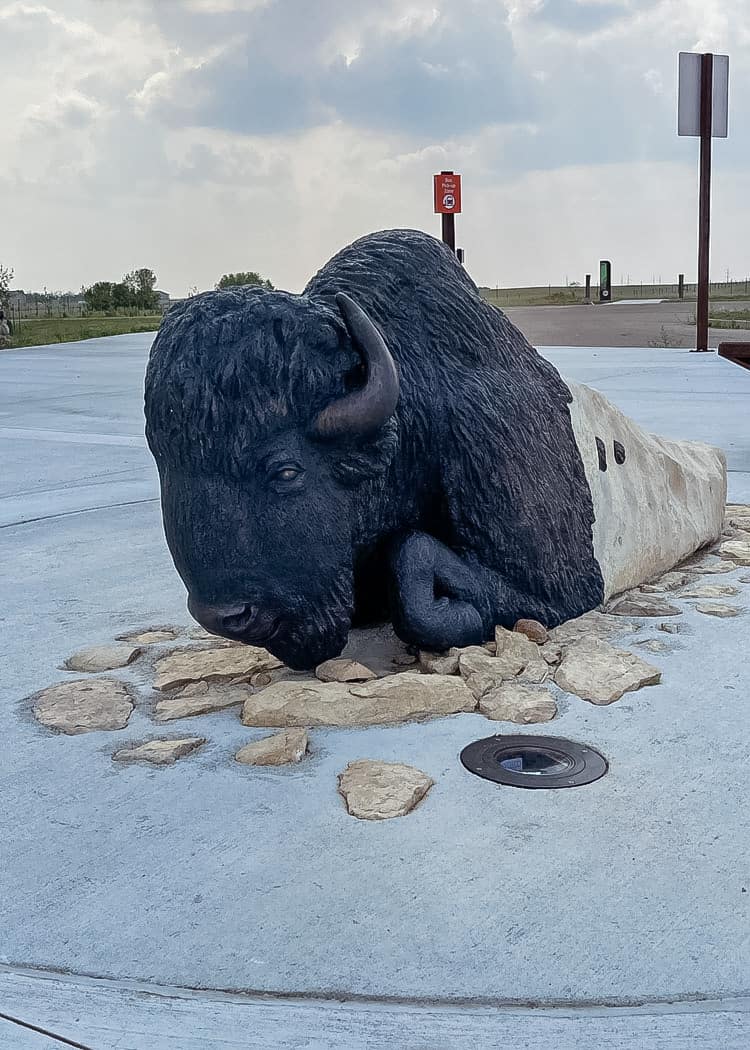
We learned their hunting methods, as well as how the Plains Peoples utilized every part of the bison for food, tools, shelter, weapons, toys, and even glue.
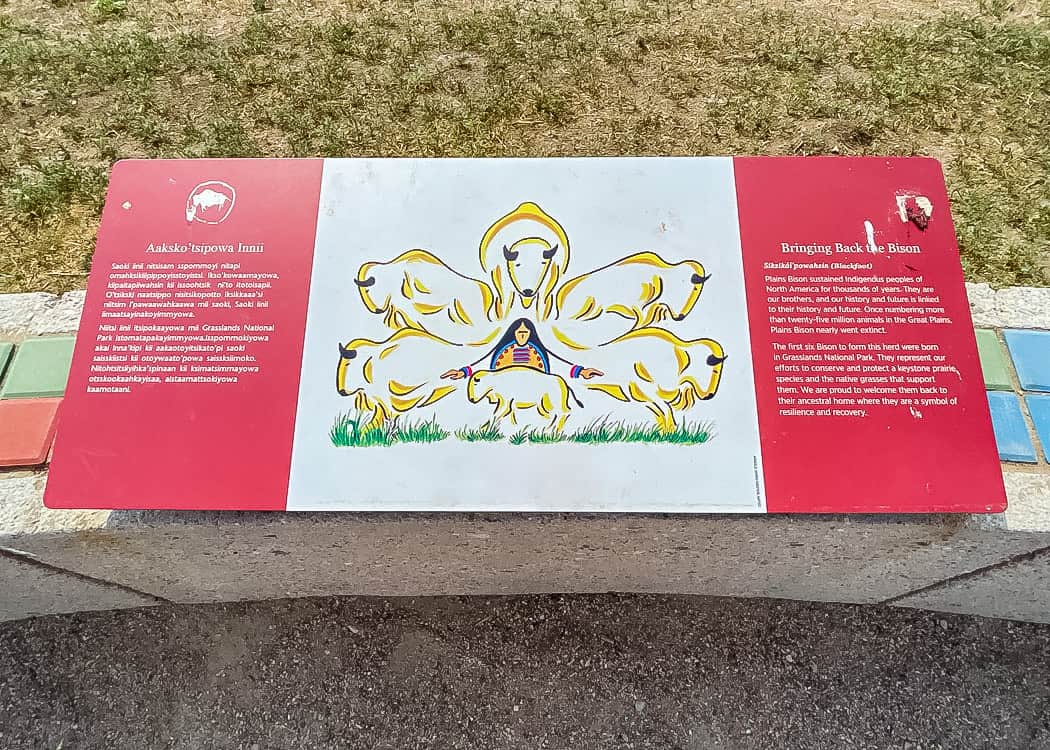
Our guide also discussed the preservation of the Bison population in the early days, and how Wanuskewin is working towards building up their own herd.
Guided Walks 2023
- Step Back in Time Walk (Available Year Round – All Ages)
- Native Plant Walk (Available May to October – All Ages)
- Archaeology Walk (Available Year Round – All Ages)
- Bison Walk (Available Year Round – All ages)
- Opimihaw Walk (Specialty – full trail exploration – 2 hrs – Available Year Round – All Ages)
- INDOOR New Exhibits Tour (Available Year Round – All ages)
5. Catch a Cultural Performance
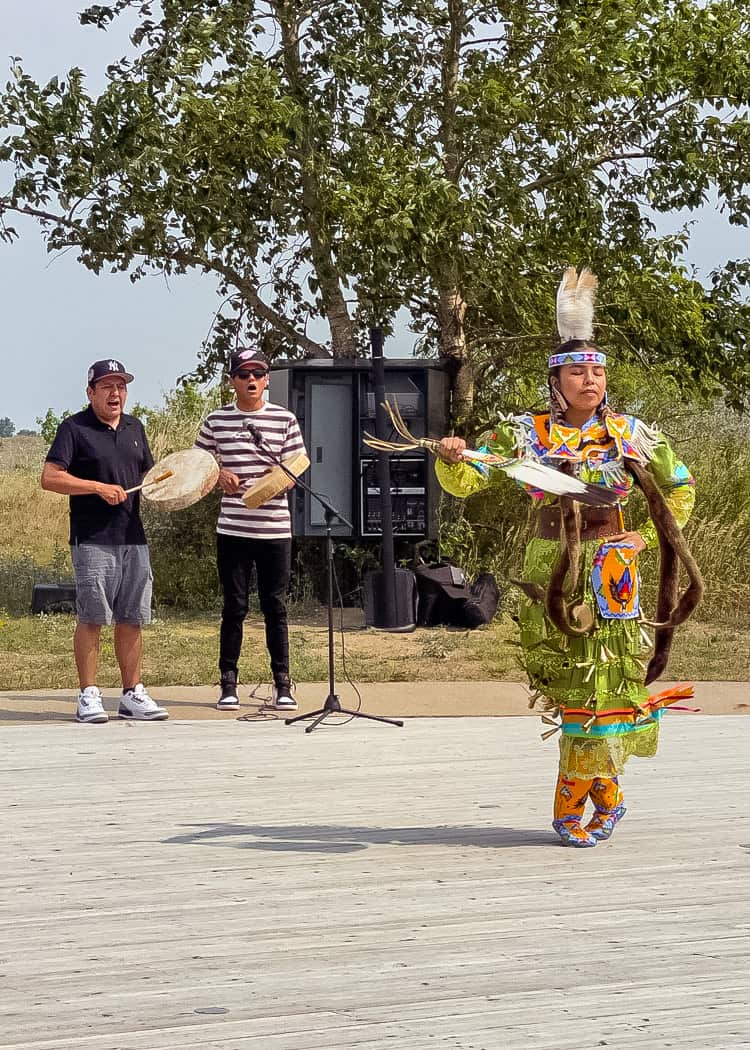
During our visit to Wanuskewin Heritage Park, we made sure not to miss out on the daily cultural performance. Taking place in the outdoor arena, we were treated to a traditional Jingle Dress Dance.
The dance gets its name from the rows of metal cones—called “ziibaaska’iganan”—attached to their dresses, which make a distinctive sound as they dance. The Jingle Dress Dance has a rich history and is completely mesmerizing to watch and listen to.
History of the Jingle Dress Dance
The Jingle Dress Dance began with the Mille Lacs Band of the Ojibwe Tribe in the early 1900s and became prevalent in the 1920s in the Great Lakes region of the US and Canada.
The story tells of how the dress was first seen in a dream. A medicine man’s granddaughter grew sick, and as the man slept, his Indian spirit guides came to him and told him to make a Jingle Dress for the little girl.
The spirit guides said if the child danced in it, the dress would heal her. The Jingle Dress was made, and the tribe came together to watch the child dance.

At first, the child was too sick to dance alone so her tribe carried her. After some time, the little girl was able to dance alone, cured of her sickness.
And although the dance started with a grandfather and a little girl more than a century ago, today, the Jingle Dress Dance is commonly seen in competitive pow-wows, performed by women and girls in First Nations and Native American communities.
6. Find a Cool Souvenir in the Gift Shop
The Wanuskewin Gift Shop is a must-see when visiting the Heritage Park. The shop is filled with authentic handmade items made by local First Nation artisans. You will find several treasures here that aren’t available anywhere else.
And aside from taking home some wonderful souvenirs, when you make a purchase at the Wanuskewin Gift Shop, you are helping to support First Nation artisans for their work. The artisans can then continue their traditional practices and ensure that these traditions are passed down to future generations.

We spent quite a bit of time pouring over beaded moccasins, birch bark baskets, traditional quill workpieces, and amazing hand-painted earrings, artwork, and soapstone carvings. The kids finally settled on some beautiful dreamcatchers, and a pair of earrings.
You will also find some local Saskatchewan-made jams, syrups, and local-made medicinal muskeg tea. I scooped up a jar of Saskatoon Berry jam, which was absolutely delicious!
7. Visit the Bison Herd
According to archeological records that span 6000 years, Plains Bison have always been the focal point of what is now Wanuskewin Heritage Park. But nearly 150 years ago, the Plains Bison herds disappeared from the lands.
In December 2019, Wanuskewin was thrilled to partner with Parks Canada to once again welcome them home. Six female calves from Grasslands National Park established the herd at Wanuskewin.
Shortly thereafter, an additional five animals from the US, including a mature bull and four pregnant female bison, joined the Grasslands herd. Because the US herd has ancestral ties to Yellowstone National Park, their addition has ensured that Wanuskewin’s bison are not only diverse and healthy but also pure Plains bison.
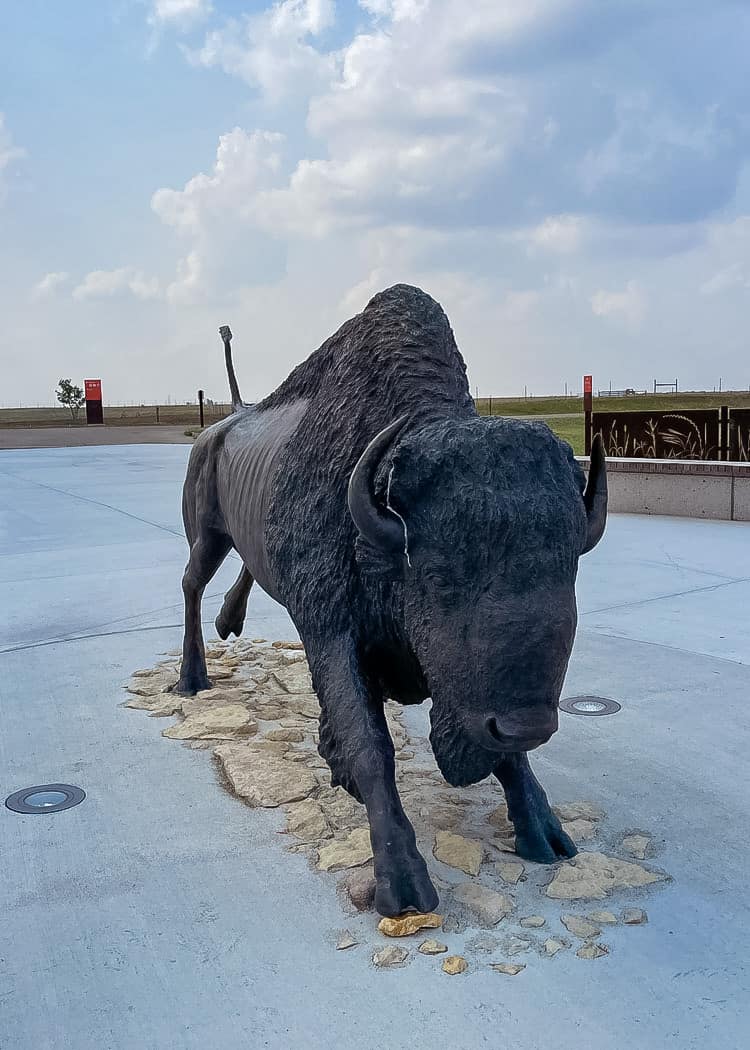
The spring of 2020 saw 4 healthy baby bison calves being born to the herd at Wanuskewin. All of these bison have genetic pedigrees that are descended from remnant bison herds from the 1870s–1880s on the Northern Plains.
The goal of bison restoration at Wanuskewin is to establish a conservation herd of 50 animals. The grasslands of North America are one of the most endangered biomes in the world.
By introducing bison back to the land, Wanuskewin can help restore native grasses and create a habitat for an animal that was all but extinct in the late 1800s.
The efforts to restore Plains Bison and grasslands to the Park recognize the deep spiritual connection that First Nations people from across the Great Plains have with these majestic animals.
8. Admire Indigenous Artwork
Wanuskewin Galleries showcases the work of Indigenous artists and creators. There are two art galleries to explore; a smaller one for short-term shows and a larger one for longer-term exhibitions.
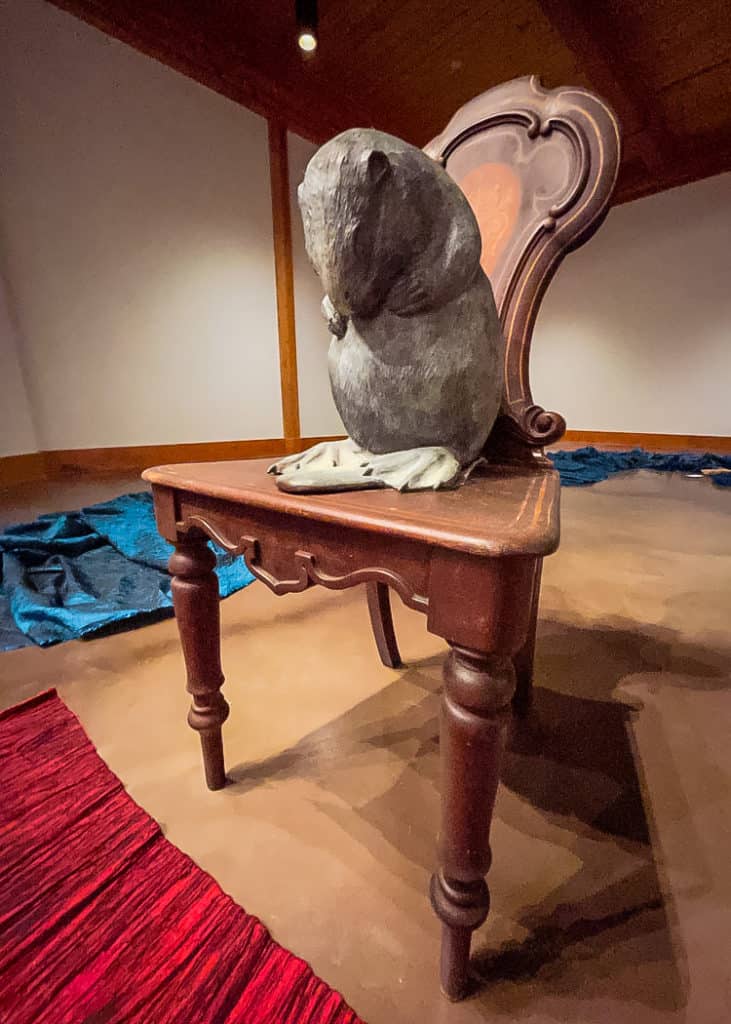
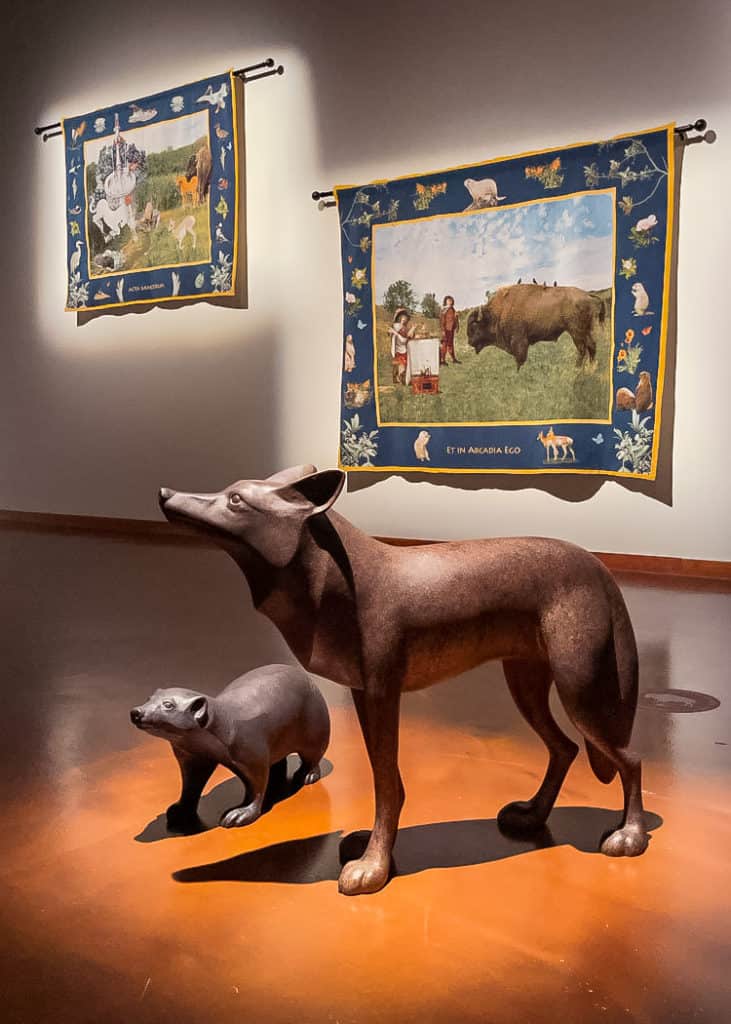
The Gallery provides a space in which the artists can present and develop their work on both a professional and creative level. Along with historical exhibits, the Gallery’s rotating visual displays allow for the preservation of Indigenous artistic practices.

We found the Gallery to be quite interesting, with beautiful artwork, as well as interpretive pieces. The kids enjoyed looking at the sculptures, as well as learning from the artists’ descriptions.
9. Have Some Fun in the Playground
The Wanuskewin Heritage Park interpretive playground was designed to be an inviting space for children to explore and challenge themselves. The various playground structures allow kids to make subtle connections (gathering circles, bison sculpture, rubbing rock) to the cultures and stories of the many Indigenous Peoples who have gathered in this place over the last 6000 years.

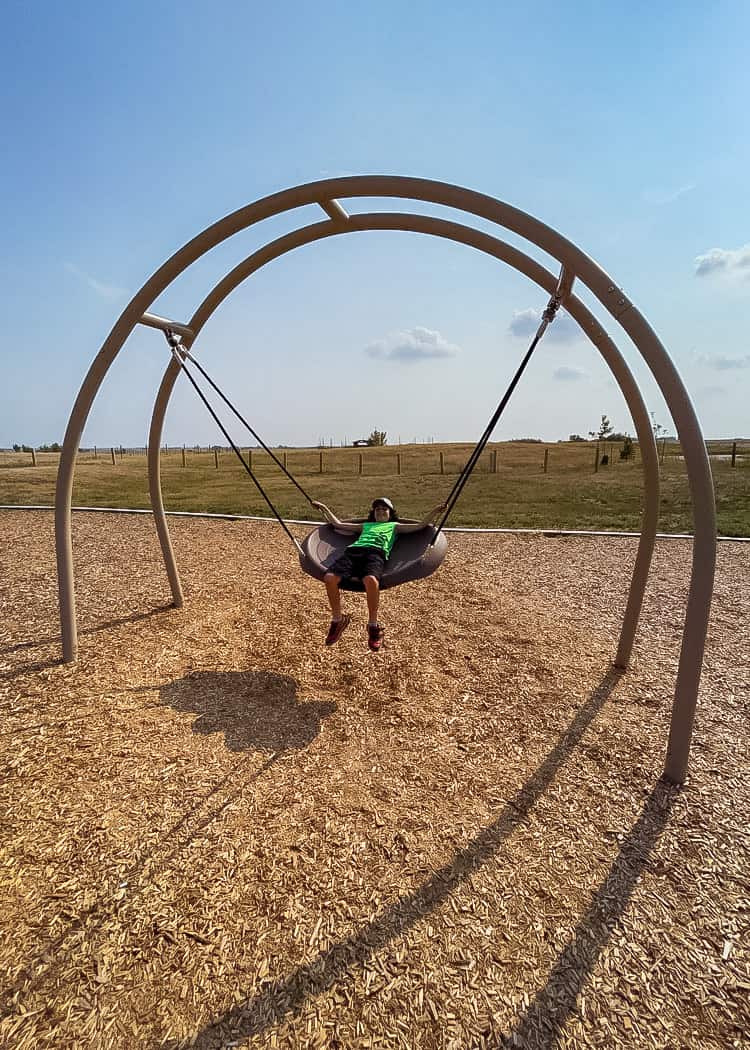
With various wood structures to climb, swings, slides, nets to bounce in, and sculptures to enjoy, kids have all they need to burn off some energy while enjoying the Heritage Park.

10. Sleep in a Tipi
If you are looking for a truly unique and submersive experience, Wanuskewin Heritage Park offers overnight accommodations and programming in a Traditional Tipi in the Opimihaw Valley.
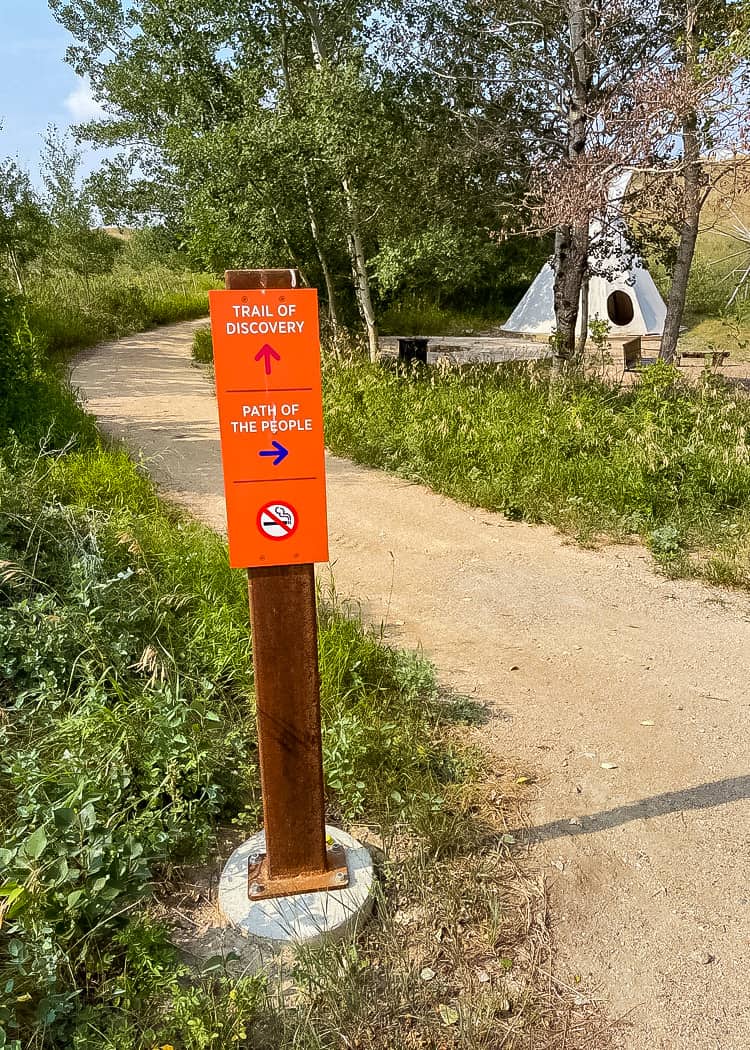
This program requires a minimum of 15 people, or a minimum charge if your group is smaller than 15.
The Tipi Village can accommodate up to 4 tipis set up, with each tipi sleeping up to 10-12 people.
Each Tipi Sleepover includes the choice of 2 guided programs, a campfire bannock bake with hot chocolate, as well as a light breakfast in the morning.
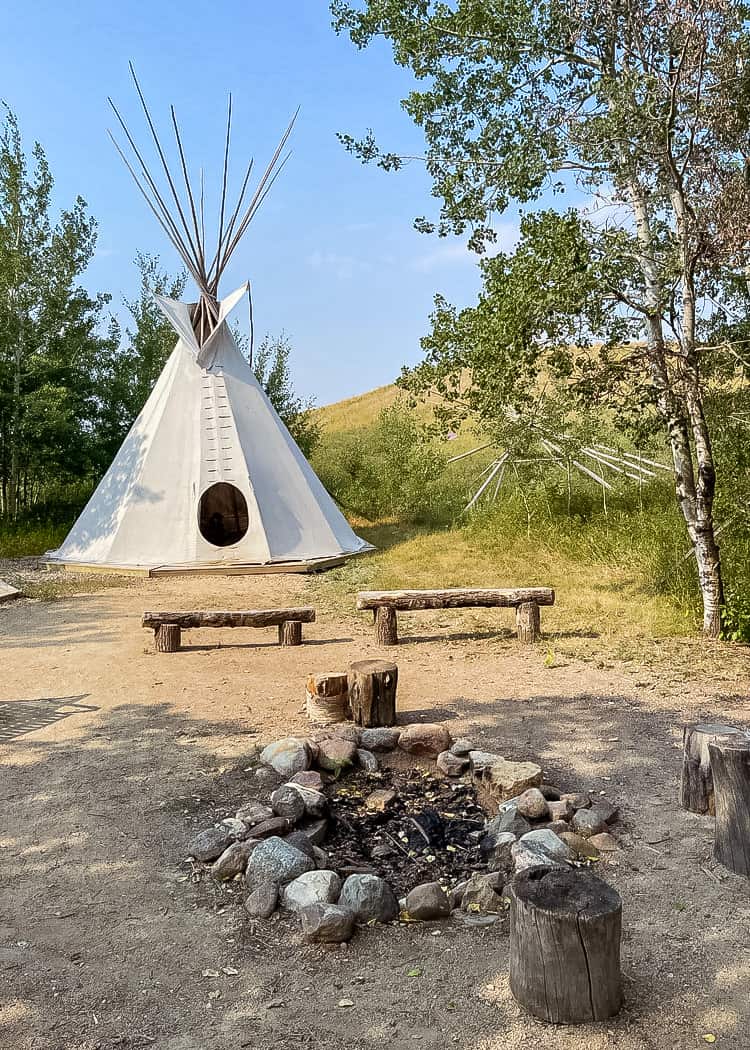
The guided programs are carefully curated to teach you some of the lessons the Plains Indigenous peoples passed from generation to generation:
Native Plant Walk
During this trail walk, participants are introduced to a variety of plants used in many ways by Plains Indigenous peoples. From bug repellent to basket making, the Opimihaw Valley is rich with useful vegetation.
Tipi Teachings Program
Learn about traditional teachings regarding the practical purpose of each tipi pole, and how they connect to each stage of life.

Traditional Games
The traditional hunter-gatherer lifestyle was incredibly demanding, requiring the Plains Indigenous Peoples to be in top physical fitness. Traditional games played an important role in educating the younger generation, by developing physical skills and encouraging social development.
How Long Do You Need at Wanuskewin Heritage Park?
If you are looking to take advantage of everything that Wanuskewin Heritage Park has to offer, then we would recommend spending a half-day there. 3-5 hours would enable you to take a tour, catch the cultural presentation, hike the trails, shop, enjoy a meal, and even have a chance to play in the park.


If you are short on time, we would recommend skipping the hikes. And if you can’t catch the Bison Tour, you are still able to do the walk to the Bison fields yourself. If you are lucky, you will be able to catch a glimpse of the herd roaming the plains!
Final Thoughts on Wanuskewin Heritage Park
We left Wanuskewin Heritage Park with a much bigger appreciation of Indigenous culture and history. We would definitely recommend adding a visit to this family-friendly attraction, to your bucket list of things to do in Saskatchewan.
Pin This Post for Later!
Related Posts:
- 80+ Cool and Interesting Facts About Saskatchewan
- The Complete Guide to Grasslands National Park Saskatchewan
- The Ultimate Guide to Visiting Wanuskewin Heritage Park
- 21 Fantastic Things to Do in Saskatchewan with Kids
