Is Nova Scotia an Island?
Has the question “is Nova Scotia an island?” ever crossed your mind? Well, you wouldn’t be alone!
As a Canadian who loves to travel, I have come across this question more times than I can count. And it’s not hard to see why – Nova Scotia is surrounded by water, and if you look at it on a map, it certainly looks like an island.
But is it really? In this blog post, we’ll explore this and other related questions and settle the debate once and for all.
Is Nova Scotia an Island?
No, Nova Scotia is not an island.
It is actually a peninsula located on the eastern coast of Canada. While Nova Scotia is almost entirely surrounded by water, it is still connected to the mainland of Canada by a narrow strip of land that borders the province of New Brunswick.
Despite not being an island, Nova Scotia is often referred to as one due to its unique location on a peninsula that is almost entirely surrounded by water.

Is Nova Scotia a Peninsula or an Island?
Nova Scotia is not an island, it is actually a peninsula. Although it may look like an island on a map, it is connected to mainland Canada by a narrow strip of land called the Isthmus of Chignecto.
The isthmus, which is basically a land bridge, is approximately 21 kilometres wide and separates the waters of the Bay of Fundy from those of the Northumberland Strait. The isthmus also connects Nova Scotia to New Brunswick .
So why is there confusion about whether Nova Scotia is an island or a peninsula? Well, the main reason is that the province is almost completely surrounded by water, giving it an island-like appearance.

Could Nova Scotia Become an Island?
While it is theoretically possible for Nova Scotia to become an island, it is highly unlikely to happen in the foreseeable future.
The only way for Nova Scotia to become an island would be if the narrow strip of land that connects it to the mainland – the Isthmus of Chignecto – were to be completely eroded away by the sea or flooded over.
It’s also worth noting that even if Nova Scotia were to become an island, it would not have a significant impact on the lives of the people who live there.
The province has well-established transportation links to the mainland, including highways, bridges, and ferries, so residents and visitors would still be able to travel to and from the island easily.

Is Any Part of Nova Scotia Actually Attached to Canada or is it All Just an Island?
Nova Scotia is not an island, despite being surrounded by water on three sides. As we mentioned above, Nova Scotia is actually connected to New Brunswick and the rest of Canada by the Isthmus of Chignecto.
The Isthmus of Chignecto is a narrow, low-lying strip of land that is just 21 kilometres wide at its narrowest point. It has been an important transportation route for centuries, with roads, railways, and pipelines running through it to connect Nova Scotia with the rest of Canada.
So, while Nova Scotia may look like an island on a map, it is actually part of the larger North American landmass. This connection has played a crucial role in the province’s history and development, allowing it to maintain close ties with the rest of Canada.

Is Nova Scotia Completely Surrounded by Water?
Nova Scotia is not completely surrounded by water, but it is almost entirely surrounded by water. The province is located on the eastern coast of Canada and is bordered by the Atlantic Ocean to the south, the Bay of Fundy to the west and the Northumberland Straight to the east.
While Nova Scotia is not technically an island, it is often referred to as such due to its location on a peninsula. The only land border Nova Scotia shares is with the province of New Brunswick to the west, which is separated from Nova Scotia by the Bay of Fundy.
How Many Islands in Nova Scotia?
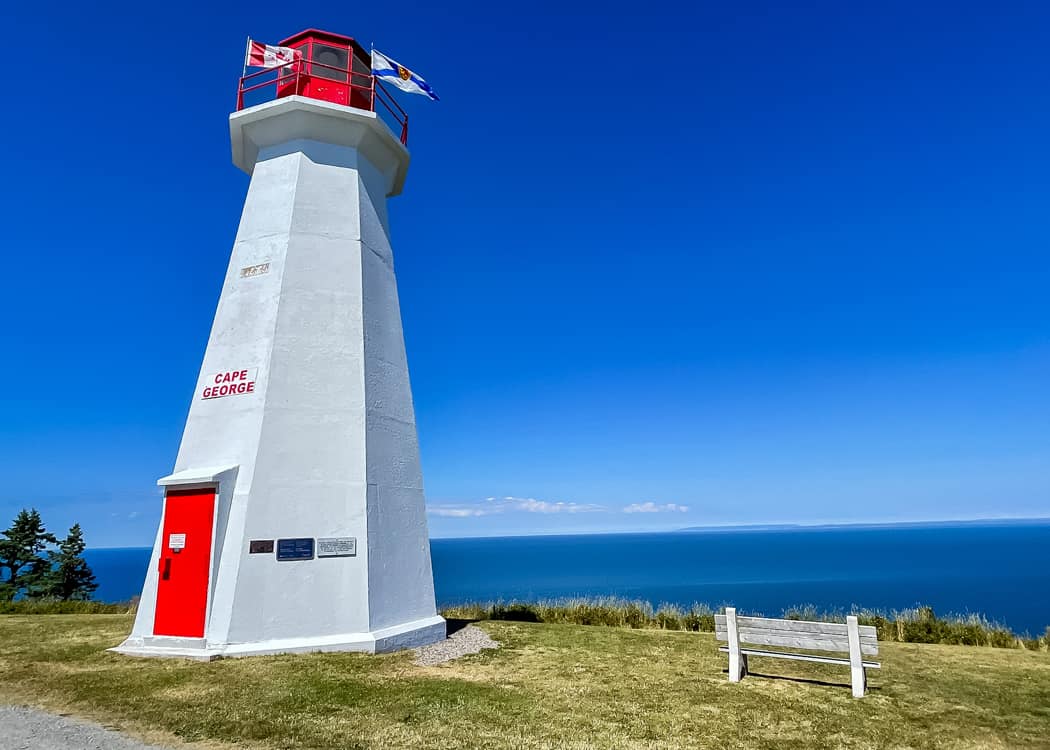
Nova Scotia is home to over 3,800 islands, ranging in size from small rocky outcrops to large land masses. These islands can be found along the province’s coastline, in the Bay of Fundy, and in the Northumberland Strait.
Some of the most well-known islands in Nova Scotia include Cape Breton Island, which is home to the Cabot Trail and the Fortress of Louisbourg National Historic Site, and Sable Island, which is famous for its wild horses and unique ecology.
Other popular islands include McNabs Island, located just off the coast of Halifax, and the Tusket Islands, which are known for their picturesque fishing villages and scenic beaches.
While many of these islands are uninhabited and remote, others are home to vibrant communities that rely on fishing, tourism, and other industries for their livelihoods. The islands of Nova Scotia are a popular destination for tourists and locals alike.

What is Nova Scotia Considered?
Nova Scotia is considered a province of Canada. Located in the eastern region of the country, it is one of the four Atlantic provinces, along with New Brunswick, Prince Edward Island, and Newfoundland and Labrador.
As a province, Nova Scotia has its own government, led by a Premier, and its own legislative assembly, which is responsible for making laws and governing the province. It is also represented in the Canadian federal government by its own Members of Parliament (MPs) and Senators.
Nova Scotia is known for its rich cultural heritage, stunning natural scenery, and vibrant communities. From the bustling city of Halifax to the rugged coastline of Cape Breton Island, Nova Scotia has something for everyone.
Overall, Nova Scotia is an important part of Canada’s cultural and economic landscape, and it plays a significant role in shaping the country’s identity and values.

Is Nova Scotia Part of Canada or its Own Country?
Nova Scotia is a province of Canada and is not its own country. It is one of the 10 provinces that make up Canada, and one of the 4 provinces that make up our Atlantic region.
In fact, Nova Scotia was one of the original colonies in British North America – along with New Brunswick, Quebec, and Ontario – who joined together to become the Dominion of Canada on July 1, 1867.
So while Nova Scotia has a distinct cultural identity and history, it is part of the larger Canadian community. Its residents are Canadian citizens who play a proud and important part of the Canadian federation.

Why is Nova Scotia Not Part of the US?
Nova Scotia is not part of the United States because it has always been part of Canada, which is a separate country from the United States.
Nova Scotia was first settled by Europeans in the early 1600s. After this time, the French established a colony on the eastern coast of the province, while the British established a colony in the city of Halifax in 1749.
The province remained under British control until 1867, when Nova Scotia became part of the newly formed Dominion of Canada, along with Ontario, Quebec, and New Brunswick.
There are several reasons why Nova Scotia did not become part of the United States. The expulsion of Acadians who were not loyalists served as one of the main reasons for Nova Scotia’s decision not to support the thirteen colonies’ rebellion against Britain in 1775 and 1776.

Was Nova Scotia Ever Part of the USA?
Nova Scotia was never part of the United States. While the province has a long and complex history that includes interactions with both American and British forces, it has always been part of Canada and has never been part of the United States.
After the American Revolution in the late 1700s, many loyalists who had supported the British cause during the revolution fled to Nova Scotia. The loyalists settled in communities throughout the province.
These loyalists helped to shape Nova Scotia’s identity as a distinctly British colony and played a significant role in the province’s history and development.

Do You Need a Passport to go to Nova Scotia?
Whether or not you need a passport to visit Nova Scotia depends on your citizenship and mode of transportation.
If you are a Canadian citizen or a permanent resident of Canada, you do not need a passport to travel to Nova Scotia. You can enter the province with a valid government-issued ID such as a driver’s license or provincial ID card.
If you are a citizen of the United States or another country, you will need a passport to enter Canada and travel to Nova Scotia. This applies regardless of whether you are travelling by air, land, or sea.
In addition to a passport, some travellers may also require a visa or an Electronic Travel Authorization (eTA) to enter Canada, depending on their country of citizenship. It is important to check the Canadian government’s website for up-to-date information on entry requirements before planning your trip.

Can You Drive to Nova Scotia?
Yes, you can drive to Nova Scotia.
The province is connected to the mainland of Canada via the Trans-Canada Highway. If you are coming from the western provinces, you would follow the highway through New Brunswick and into Nova Scotia.
If you are coming from either Prince Edward Island or Newfoundland, you would enter Nova Scotia via the Confederation Bridge or the Canso Causeway.
The Confederation Bridge is a toll bridge that connects Prince Edward Island to mainland New Brunswick and is the most direct route to Nova Scotia if you are travelling from the east. The bridge spans 12.9 kilometres and takes approximately 10 minutes to cross by car.

The Canso Causeway, located in the eastern part of the province, connects Cape Breton Island to mainland Nova Scotia. The causeway is a series of bridges and causeways that spans the Strait of Canso and provides a direct connection between Cape Breton Island and the rest of the province.
Both the Confederation Bridge and the Canso Causeway are open year-round and provide easy access to Nova Scotia by car. Alternatively, travellers can also reach Nova Scotia by ferry from New Brunswick or Maine, or by air to one of the province’s airports.
How Long Does it Take to Drive Across Nova Scotia?
Although Nova Scotia is a pretty small province, it would still take you roughly 8 hours to drive across its entire length. Of course, this would vary depending on traffic, road conditions, and weather.
The province of Nova Scotia is approximately 550 kilometres long from its easternmost point in Cape Breton Island to its westernmost point at the New Brunswick border.
The distance from Halifax, the province’s capital, to Sydney, the largest city on Cape Breton Island, is approximately 340 kilometres.

Of course, if you are planning to explore the province and take some scenic routes, you will definitely need to factor in additional time for stops and detours.
Some popular routes to explore in Nova Scotia include the Cabot Trail, which is a scenic drive that takes you through Cape Breton Island, and the Lighthouse Route, which takes you along the province’s picturesque coastline.
Overall, while it is possible to drive across Nova Scotia in a day, it is recommended to take your time and enjoy the province’s natural beauty and attractions at a more leisurely pace.
What Do You Call Someone from Nova Scotia?
A person from Nova Scotia is called a Nova Scotian. This term is used to refer to anyone who is a resident of the province, regardless of their ethnic or cultural background.
The term “Bluenoser” is also sometimes used to refer to people from Nova Scotia, although it is considered more of a colloquial or informal term.
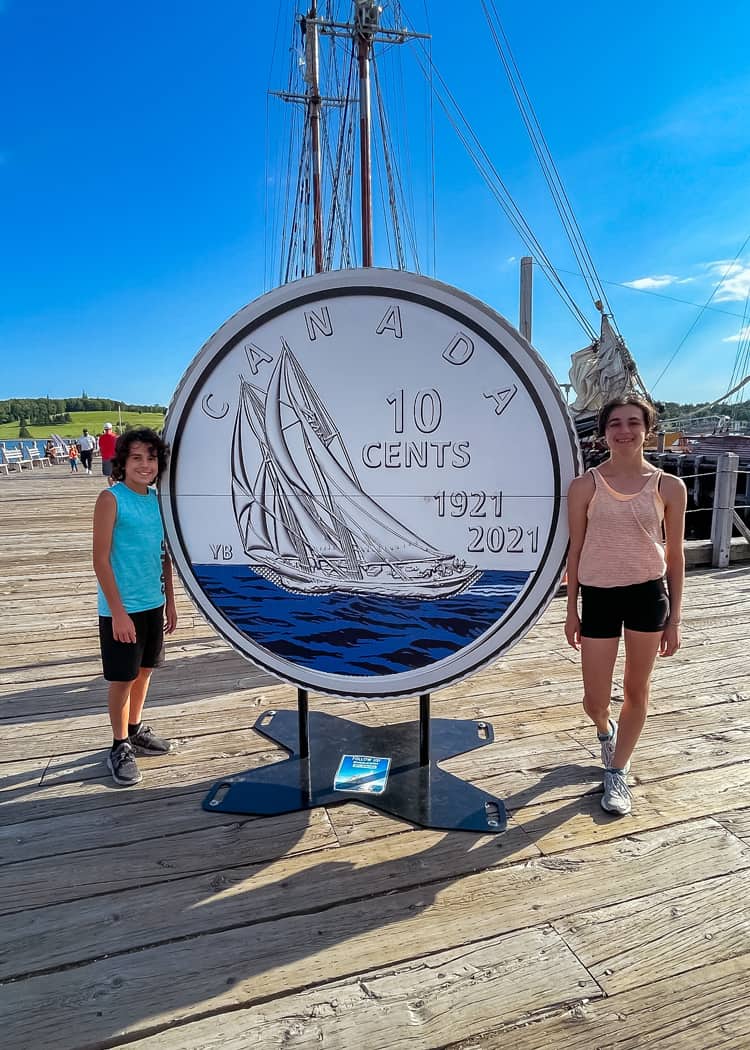
The term “Bluenoser” originally referred to the bluenose ships on the provincial flag, but it has since become a symbol of Nova Scotia pride and identity.
Overall, the term “Nova Scotian” is the most commonly used term to refer to people from the province, and is widely recognized both within and outside of Canada.
Is Nova Scotia an Island – FAQs

Yes! With over 13,000 km of coastline, numerous lakes, gorgeous valleys, four UNESCO World Heritage Sites, the highest tides in the world, and an abundance of whales, it’s no wonder why Nova Scotia is a must-visit destination!
Nova Scotia is on Atlantic Standard Time (AST) which is one hour ahead of Eastern Standard Time (the time zone followed by Montreal, Toronto, New England and the US East Coast).
The vast majority of Nova Scotians speak only English, with few speaking solely French, or both English and French. There has also been a recent resurgence of both Gaelic and the native language of the Mi’kmaq.
As of July 2022, the population of Nova Scotia was 1,019,725.
Nova Scotia takes great pride in its Scottish heritage. Visitors can delve deeper into Celtic and Gaelic customs that are popular to this day, by exploring the province’s museums, events, traditions, and festivals.
Halifax is the capital city. The population of Halifax in 2022 was 480,523 or approximately 47% of Nova Scotia’s residents.
Is Nova Scotia an Island – Final Thoughts
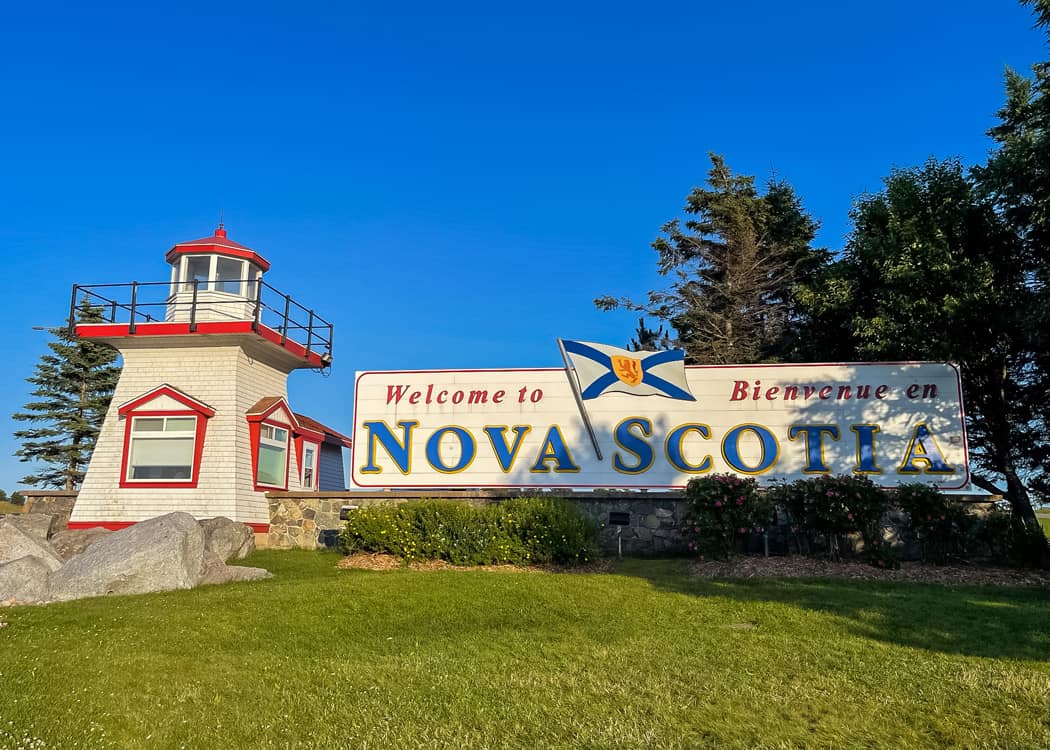
Well, there you have it! The answer to the question that may have been on your mind since you first heard about this beautiful Canadian province: Is Nova Scotia an island? The answer is no, it is most definitely NOT an island.
Despite not being an island, Nova Scotia still boasts all of the charm and beauty that one would expect from a coastal destination. From stunning beaches to charming fishing villages, and from historic lighthouses to delicious seafood, Nova Scotia has something for everyone to enjoy.
So whether you’re planning a visit to Nova Scotia or simply interested in learning more about this unique province, I hope this post has helped to clear up any confusion about whether it’s an island or not. One thing is for sure – Nova Scotia is a truly special place that is definitely worth exploring!
Pin This Post for Later!

Related Posts:
- 101+ Fun and Interesting Facts About Nova Scotia That You May Not Know
- Is Nova Scotia an Island?
- Where to See Puffins in Nova Scotia
