
Why You Should Visit Kootenay National Park Canada
Located in the Canadian Rocky Mountains, Kootenay National Park is one of the most beautiful destinations in British Columbia.
With more than 200 kilometres of hiking trails, canyons, lush forests, hot springs, and a ton of opportunities for wildlife sightings, there are so many reasons why you should visit Kootenay National Park, Canada.
Where is Kootenay National Park?
Located in southeastern British Columbia, Kootenay National Park takes up 1,406 km2 (543 sq mi) of the Canadian Rockies.
The park contains portions of the Kootenay and Park mountain ranges, the Kootenay River and the entirety of the Vermilion River.
Kootenay National Park takes its name from the Kootenay River. The river was named for the Kutenai First Nations people.
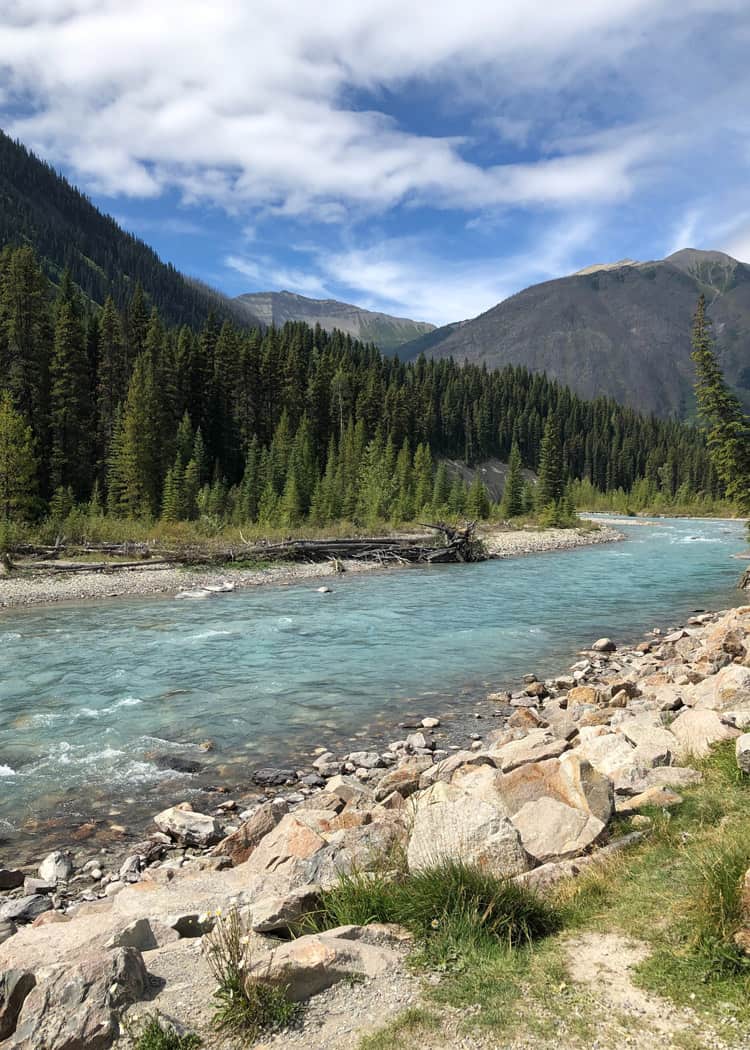
As part of the UNESCO Canadian Rocky Mountain Parks World Heritage Site, there are actually no towns within the park itself.
However, accommodations and other amenities can be found nearby in both Radium Hot Springs and Banff.
Kootenay National Park was created in 1920, as a means to develop a new road through the Rockies.
As a result, the Banff-Windermere Highway (Highway 93) was built.
The Highway is 106 kilometres long (65 miles) and goes directly through the center of Kootenay National Park, eventually connecting to Banff National Park.
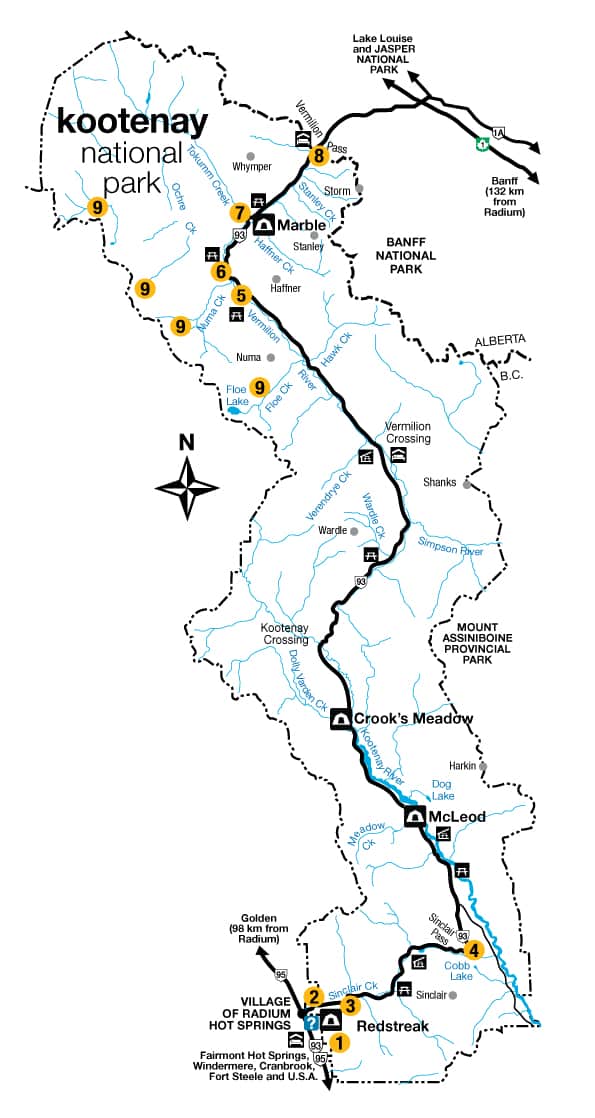
Kootenay National Park Map
The map of Kootenay National Park shows Highway 93, as well as all the main points of interest that can be found in and around the park.
Getting to Kootenay National Park
Depending on where you are travelling from, there are several ways to get to Kootenay National Park.
Flying to Kootenay National Park
If you are planning to fly to Kootenay National Park, Calgary is the nearest major airport.
You will then need to rent a car at the airport and make the approximately 2-hour (184 km) drive to the park.
Driving to Kootenay National Park
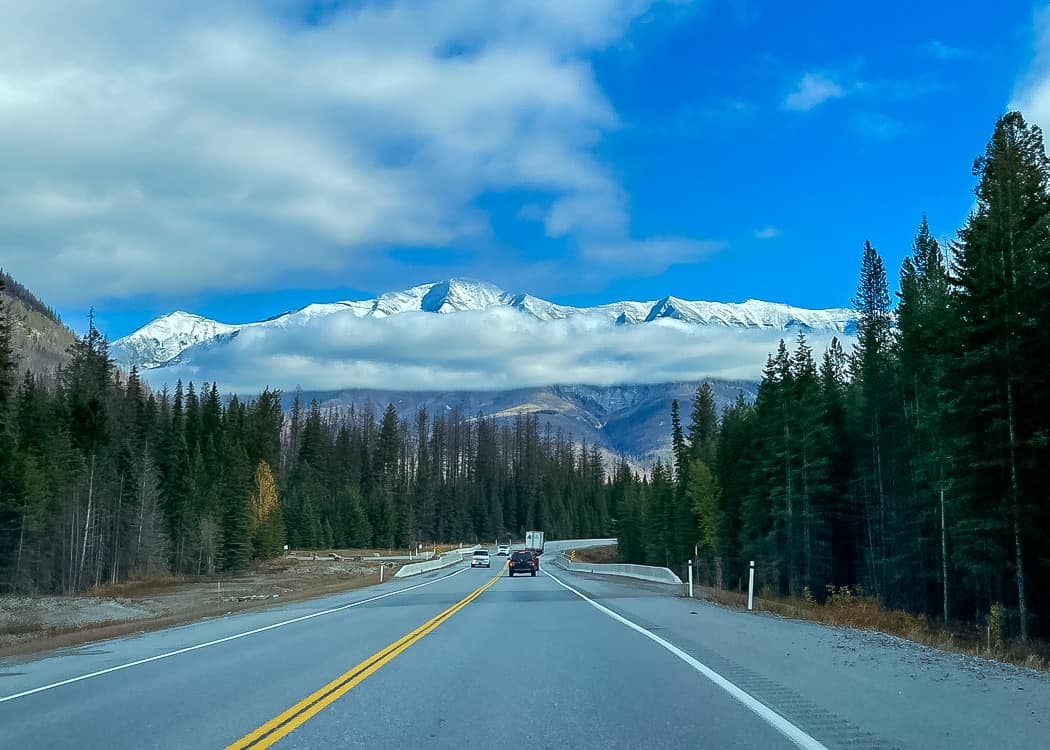
As we mentioned, Highway 93 is the only major route through Kootenay National Park.
The highway runs right down the center of the park, with most of the major points of interest not far from the highway.
You can access Highway 93 from the south via Highway 95, right at Radium Hot Springs, or from the northeast at Banff, via Highway 1.
Distances to Kootenay National Park
- Kamloops to Kootenay National Park Distance: 464 km or 5 hours 36 minutes
- Canmore to Kootenay National Park Distance: 64.3 km or 47 minutes
- Calgary to Kootenay National Park Distance: 184 km or 2 hours 5 minutes
- Jasper to Kootenay National Park Distance: 267 Km or 3 hours 15 minutes
Public Transportation
There is no transportation within the park, so you will definitely need to rent a car in order to explore Kootenay National Park.
What is Kootenay National Park Known For?
Kootenay National Park is known for both its archaeological significance and its gorgeous landscape.
The park was designated as part of the Canadian Rocky Mountain Parks World Heritage Site in 1984.
In addition to some incredible hiking and backpacking opportunities, the main attractions that bring visitors to Kootenay are Marble Canyon, Sinclair Canyon, the Radium Hot Springs, and the Paint Pots.
This is also where you will find the largest crowds, so keep this in mind when planning your park itinerary.
When is the Best Time of Year to Visit Kootenay National Park?
Kootenay National Park is open all year, but June through September are the most popular months for visitors.
The summer months are not only the warmest, but most of the snow and ice will have melted by late May or early June.
You will find that most services in the park, as well as campgrounds, are open from mid-May through mid-October.
Of course, during the peak season, you will also find the largest crowds.
However, if you are okay with slightly cooler temperatures and a light dusting of snow, then Autumn is a wonderful time to visit.
Not only is the scenery gorgeous and the weather still pleasant, but you can expect a lot fewer people out on the trails.

Winter in Kootenay National Park can also be quite spectacular.
However, you should have some decent mountaineering skills as well as a vehicle that is equipped with snow tires just to be safe.
Wintertime means paying attention to avalanche conditions, especially at higher altitudes.
On the plus side, winter also means that you will have the park mostly to yourself!
And always keep in mind that the weather in the mountains can change very quickly, so dress in layers.
Also, be sure to always bring sunglasses, a hat and wear sunscreen — even in winter. The sun at the alpine altitude can be really strong.
12 of the Best Things to Do in Kootenay National Park
Kootenay National Park is an incredible place to visit if you like the outdoors.
With incredible mountain views, lush forests, and gorgeous rivers and canyons, there is so much to see and do in Kootenay National Park, no matter what your interests are.
1. Spend the Day Hiking
With more than 200 kilometres of trails, Kootenay National Park has hiking trails available for all skill levels.
Whether you are searching for waterfalls or wildlife, the gorgeous mountain and forest trails will not disappoint.
Although there are several day hikes, as well as a ton of short hikes available, a couple of the best Kootenay National Park Hikes include Marble Canyon and Sinclair Canyon.
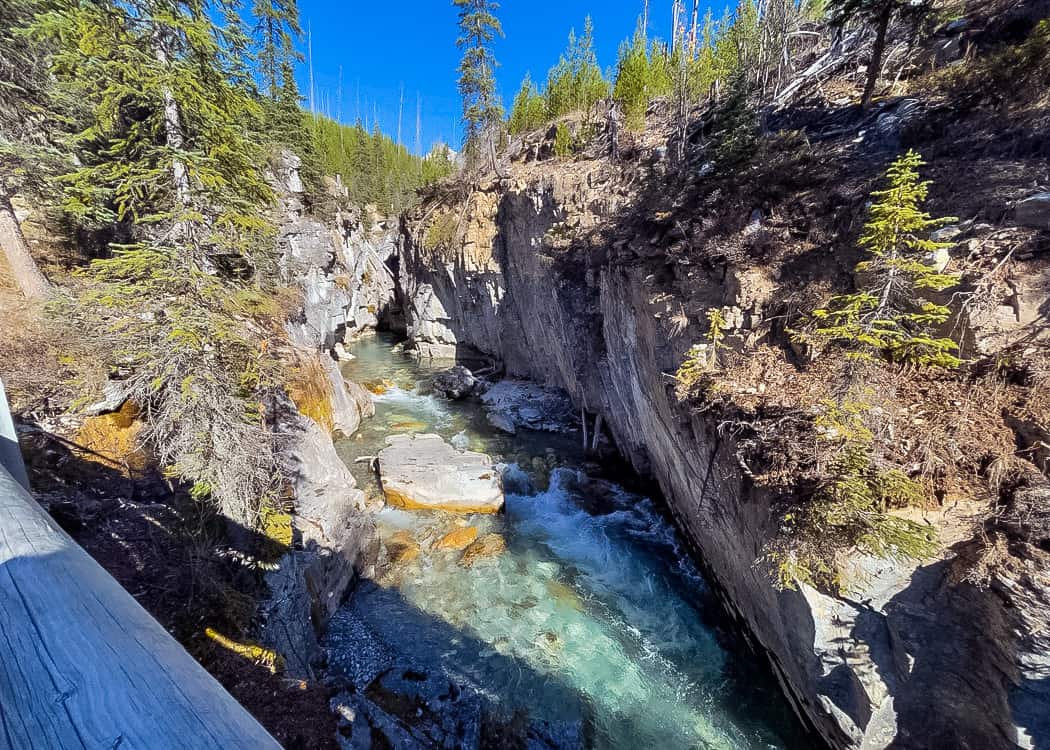
Marble Canyon
Length (one way): 0.9 km
Estimated time (return): 30 minutes
Elevation gain: 65 m | Elevation loss: 35 m
Trailhead: Marble Canyon parking lot, 89 km north of Radium Hot Springs.
The Marble Canyon hike may be on the shorter side, but it is definitely popular with both locals and tourists alike.
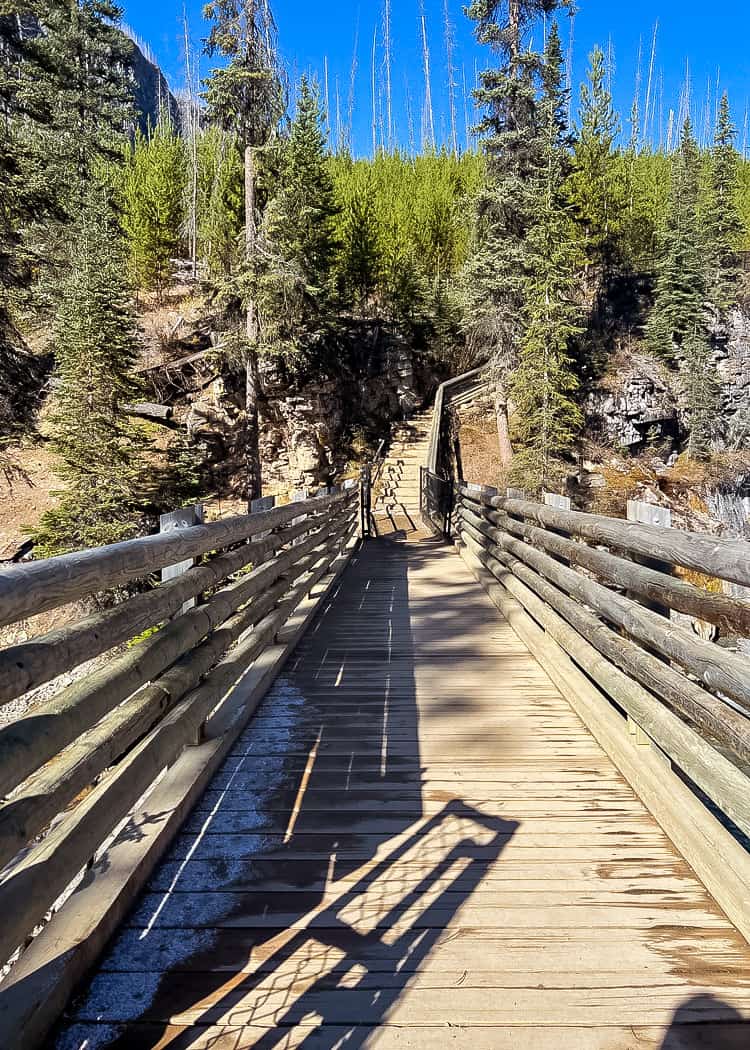
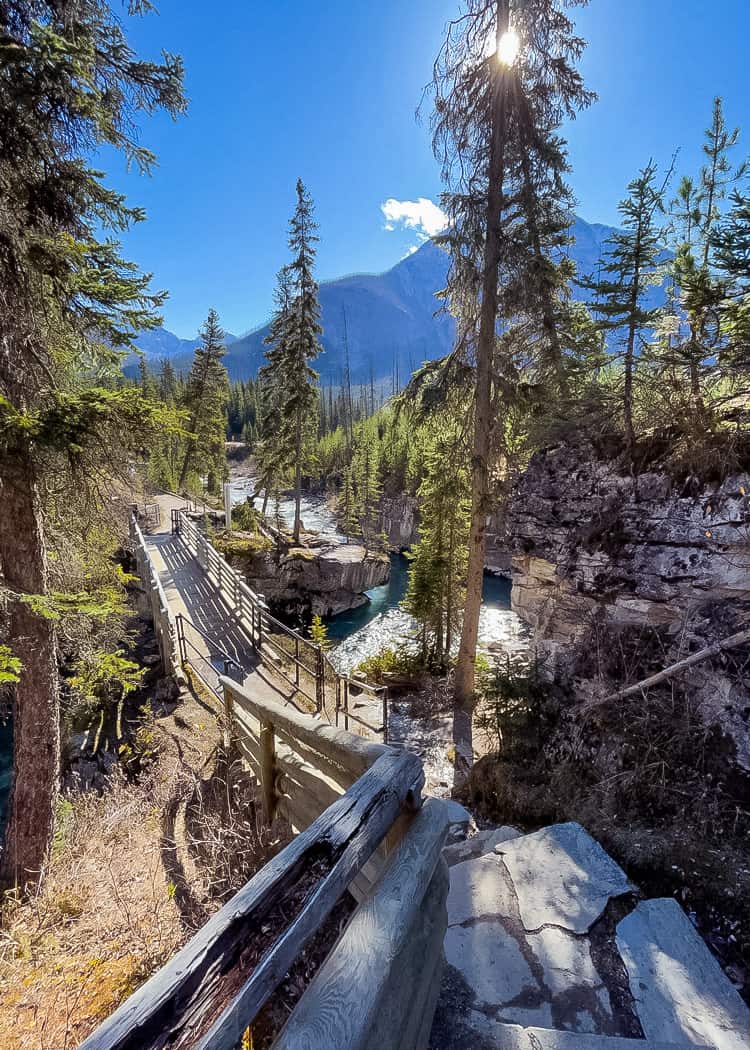
The trail is well-maintained, well-marked, and is suitable for all ages and abilities. You will even find a set of Red Chairs along the way!
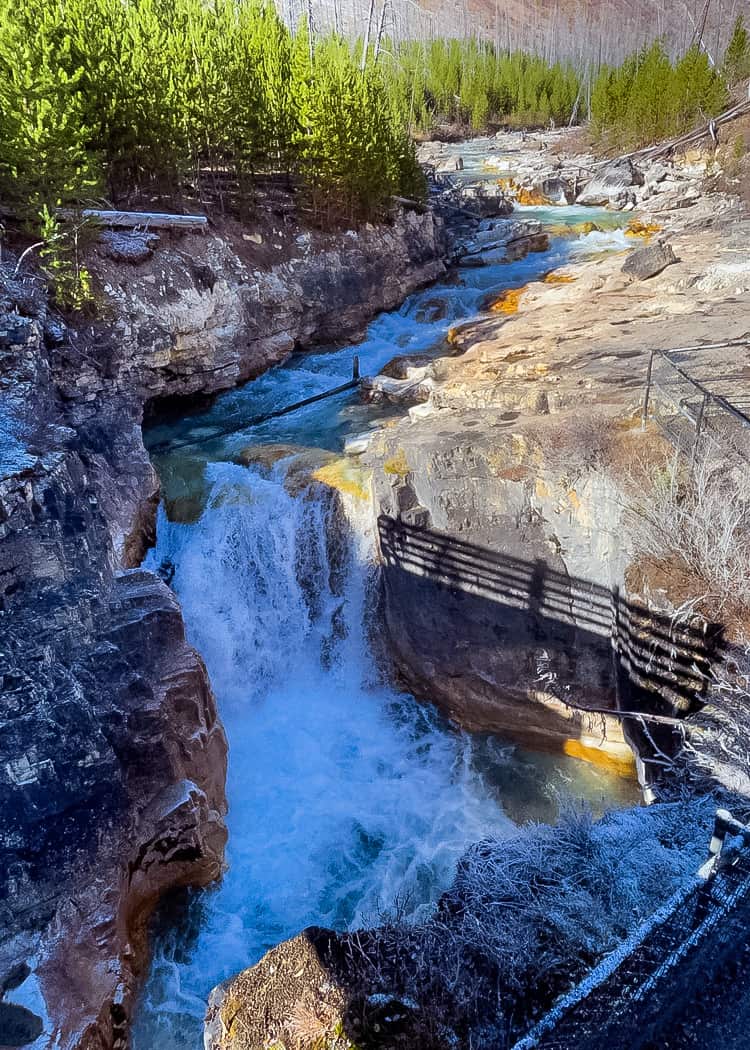
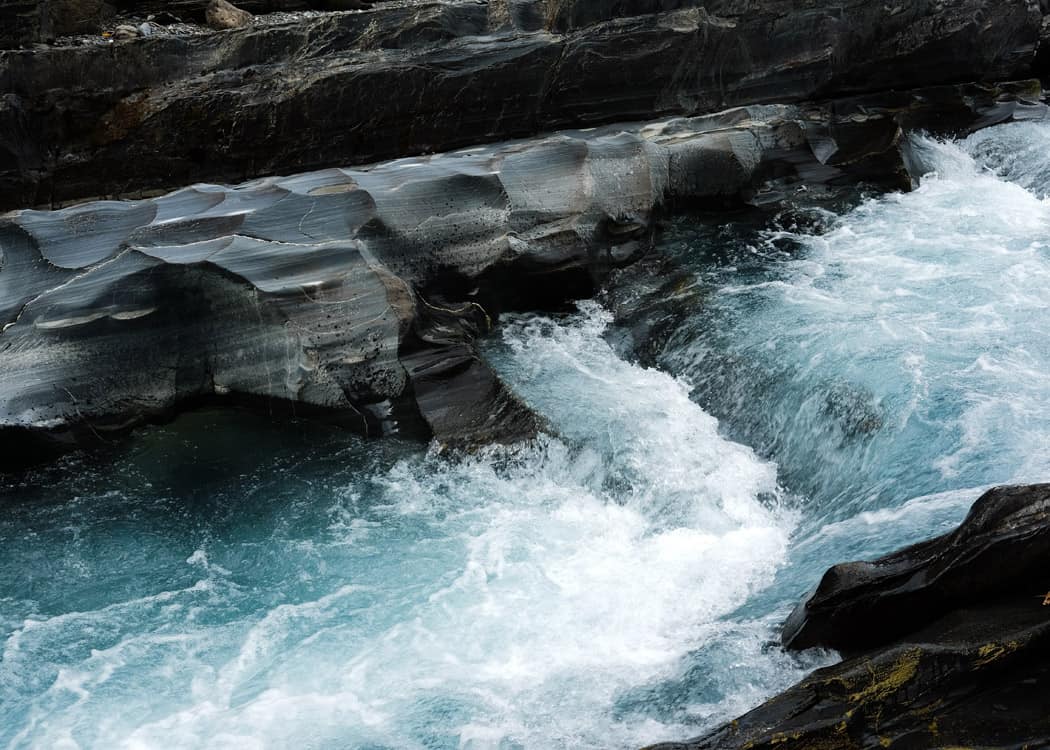
The trail makes its way along the rim of the canyon, across several bridges, allowing incredible views of Tokumm Creek as it rushes through the narrow gorge.
And with very little effort, the gorgeous blue waters contrasted against the green wilderness will make for some incredible photos.
Check out tour options for Marble Canyon here.
Juniper – Sinclair Canyon Trail
Length (one way): 2.6 km
Estimated time (return): 2 hours
Elevation gain: 350 m | Elevation loss: 260 m
Trailhead: Parking area just inside the park’s West Gate, or above the Radium Hot Springs Pools main parking lot.
The Juniper Trail to Sinclair Canyon is definitely one of the most popular hikes in Kootenay National Park.
The hike takes you from Radium Hot Springs, through a juniper-filled forest, to the base of the Sinclair Canyon Falls, and up to the rim of the Canyon.
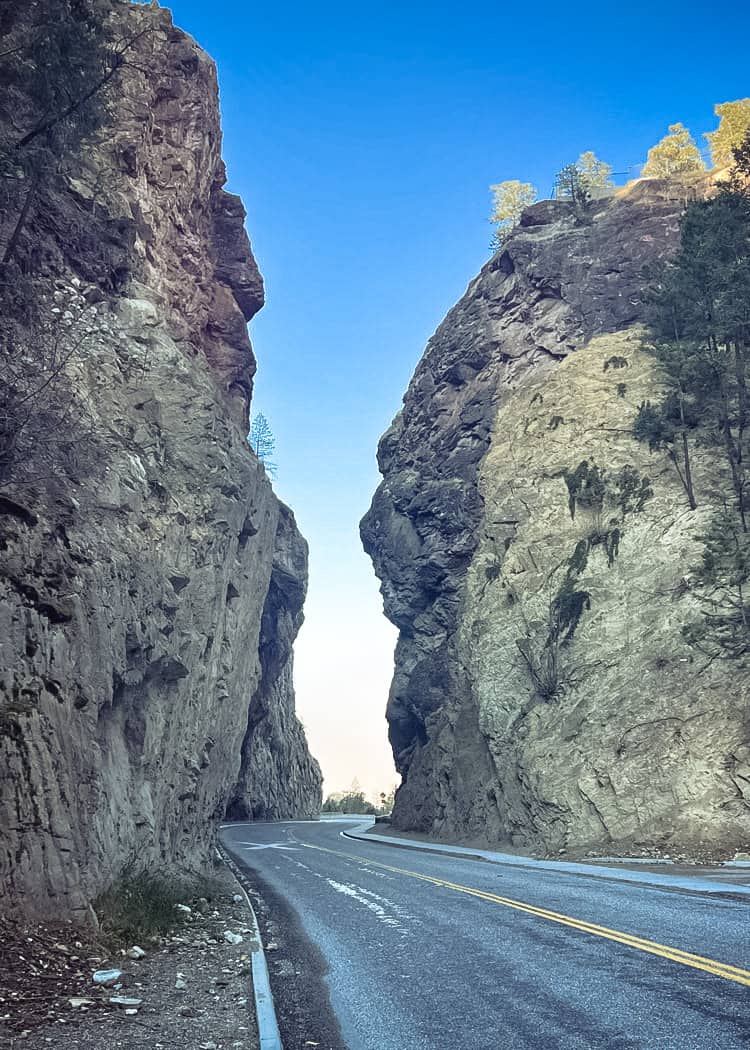
You will weave through several switchbacks and up stone steps before levelling out to a casual walk.
Not only will you get a close-up view of the base of the falls, but you will also have an opportunity to go up to the top of the canyon, where you get a terrific view of the highway and surrounding peaks.
2. Go on a Backpacking Adventure
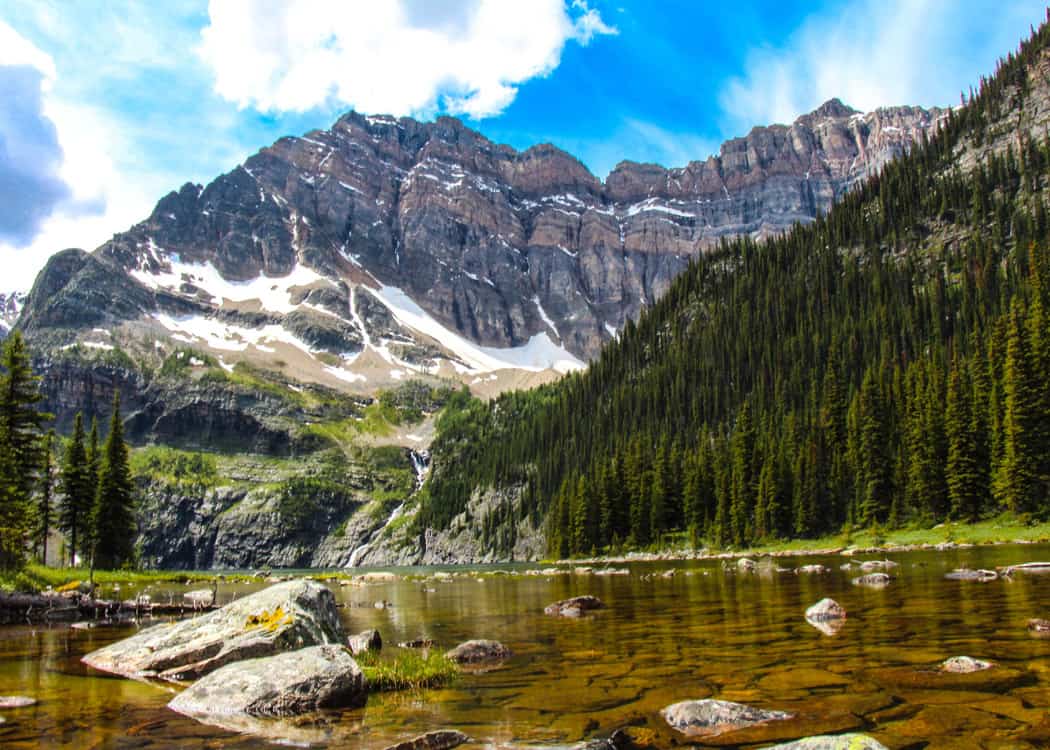
Kootenay National Park is the perfect place to go on an epic multi-day backpacking adventure.
Take the popular Rockwall Trail through lush forests, alpine meadows, past incredible waterfalls and along magnificent rivers.
The 55-kilometre-long Rockwall Trail also takes you through 5 different backcountry campgrounds.
This is pretty convenient, seeing as the hike will take you 3-4 days to complete.
If you are planning any overnight trips in the backcountry, you will need to purchase a Wilderness Permit from Parks Canada.
The permit is required all year round, whether you are backpacking or just backcountry camping.
If 3-4 days seems a little too daunting, there are shorter overnight backpacking trails in Kootenay National Park that are just as spectacular.
These hikes will also take you to places along the Rockwall Trail, just with less of a time commitment.
3. Visit the Paint Pots
Length: 2 km round-trip
Time: 40 minutes
Elevation Gain: 25 m
Visiting the Paint Pots is definitely a must when exploring Kootenay National Park.
This popular walking trail takes you along a boardwalk, through a forest, to a wetland meadow.
There, you will find a spectacular natural phenomenon called the Paint Pots.
The Paint Pots are three circular reddish-orange spring-fed pools, filled with iron oxide.
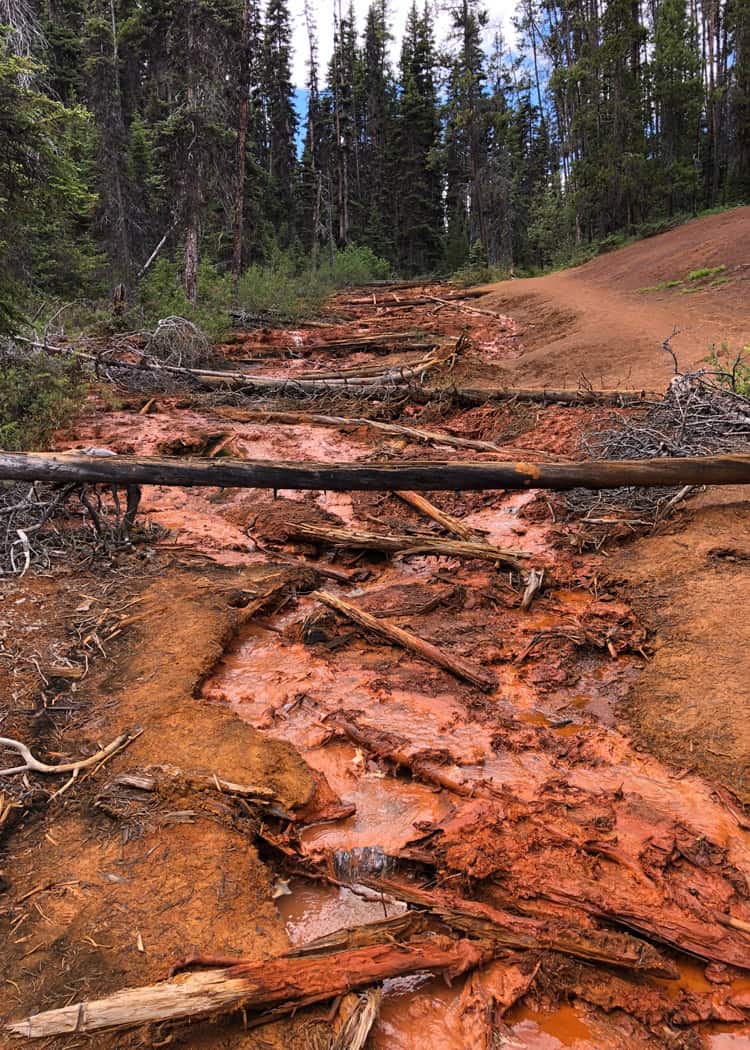
Along the boardwalk, you will find interpretive signs that describe why these iron-rich pools and ochre beds are culturally significant to the indigenous people of the area.
The signs also talk about the miners who dug the clay by hand in the early 1900s.
The Paint Pots can also be accessed in the wintertime by snowshoe.
Our word of advice: expect to get a little dirty when visiting during the summer!
Hiking boots are a good idea, as is staying on the boardwalk.
The reddish clay surrounding the Paint Pots has a tendency to stain your shoes.
4. Go Mountain Biking
With all the trails that run through Kootenay, hopping on a mountain bike to explore the park couldn’t be easier!
The trails are open from May to mid-October, giving you plenty of opportunities to have some fun.
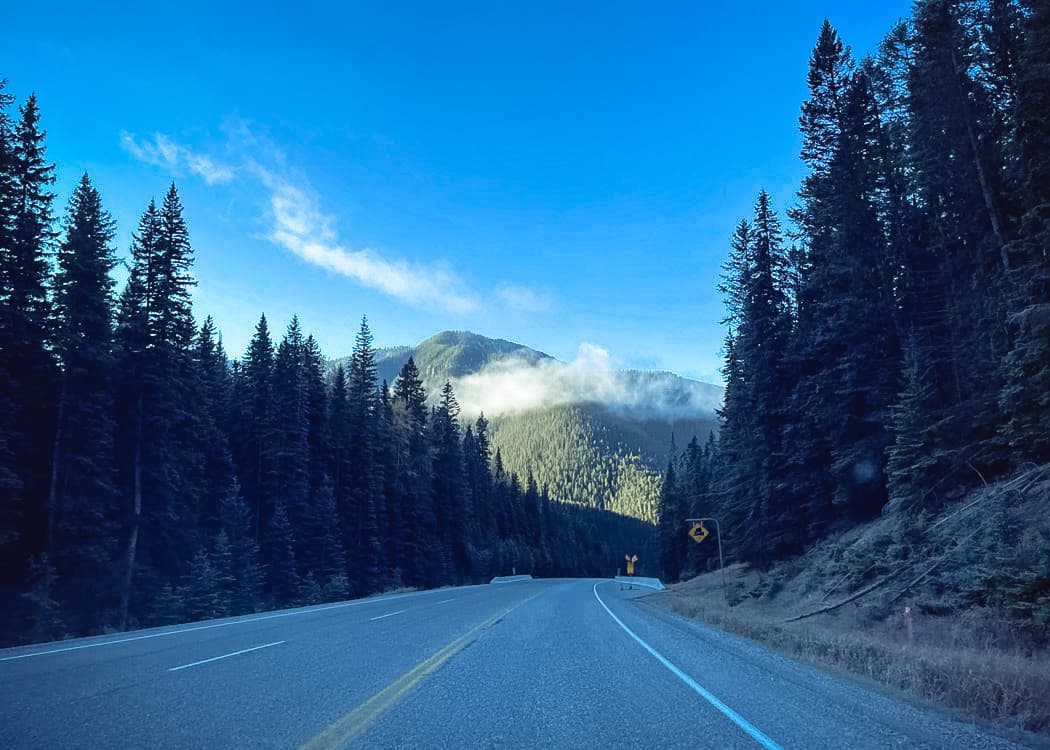
Of course, many cyclists also like the road ride from Banff to Radium.
The highway is well-paved, but be warned, the hill from Castle Junction is a tough one!
You can visit the Parks Canada website for all biking and trail information before you visit.
5. Relax in the Radium Hot Springs Pools
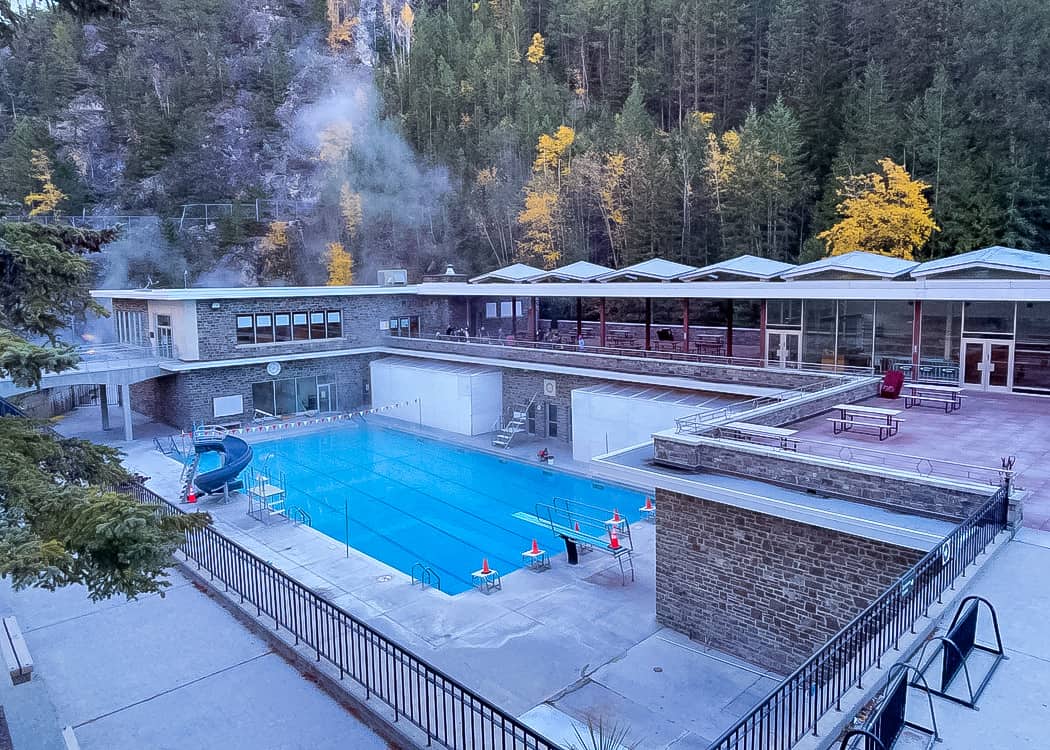
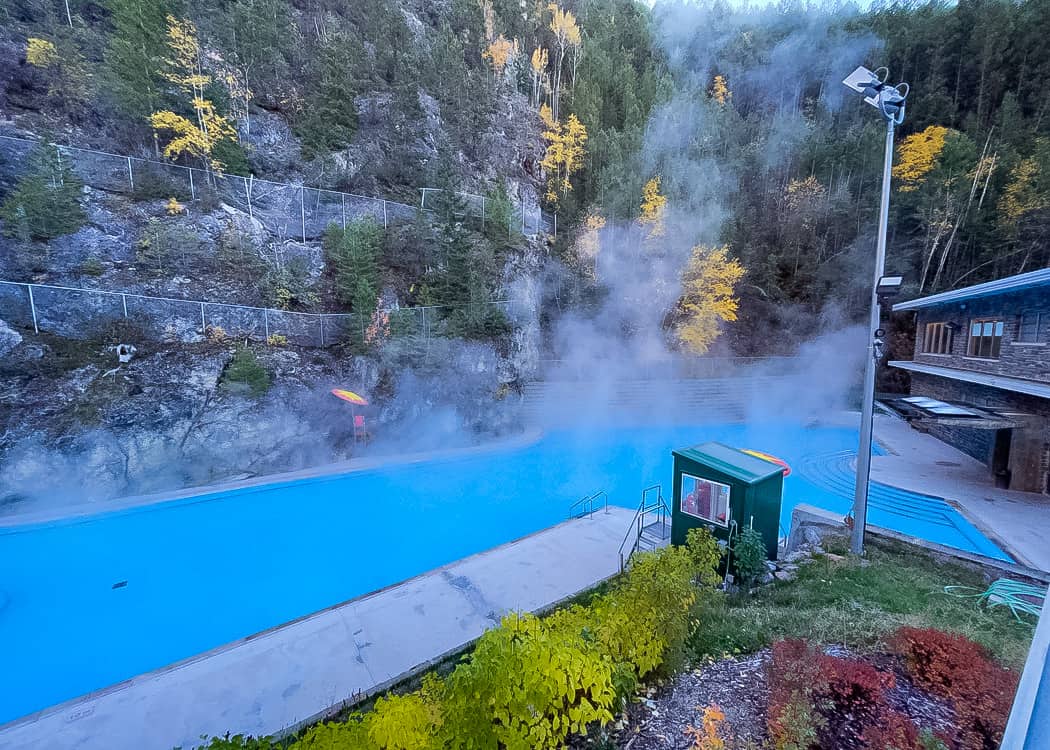
Located on Highway 93 just 3 km east of Radium are the Radium Hot Springs Pools.
Known for their healing properties, these naturally-heated and mineral-rich pools are a perfect way to relax after a long hike or warm up after a chilly day in the park.
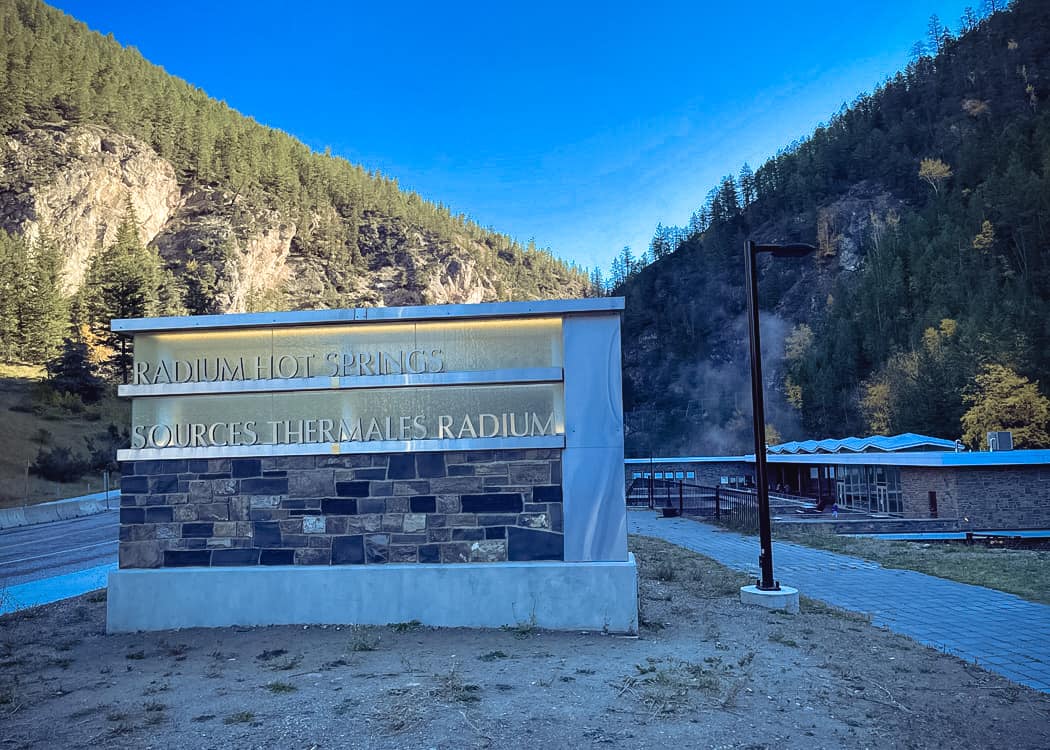
Considered one of the best things to do in Kootenay National Park, Radium Hot Springs is popular all year long.
During the winter, the warm water will help you relax, while during the summer, the water temperatures are regulated to help you cool off.
Fun Fact: The water in the Radium Hot Springs is actually radioactive! But because there are only slight levels of radium detected in the water, the amount you’re subject to over a short dip in the pool is quite negligible and won’t cause any harm.
You will find both hot and cold pools at Radium Hot Springs, with temperatures suitable for everyone.
The cost of admission to the pools is approximately $8 CAD per person.
6. Challenge Yourself with Some Rock Climbing
No matter what time of the year you choose to visit Kootenay National Park, there will be plenty of opportunities to do a little rock climbing or even ice climbing.
Of course, all of these spots are backcountry and unguided.
This means that you will need to know what you are doing and come prepared with your own gear.
7. Try Out Some Winter Activities
Kootenay National Park is the perfect place to do a little Ski touring or snowshoeing during the winter.
Just make sure you check the trail conditions or check in with the park rangers before you head out.
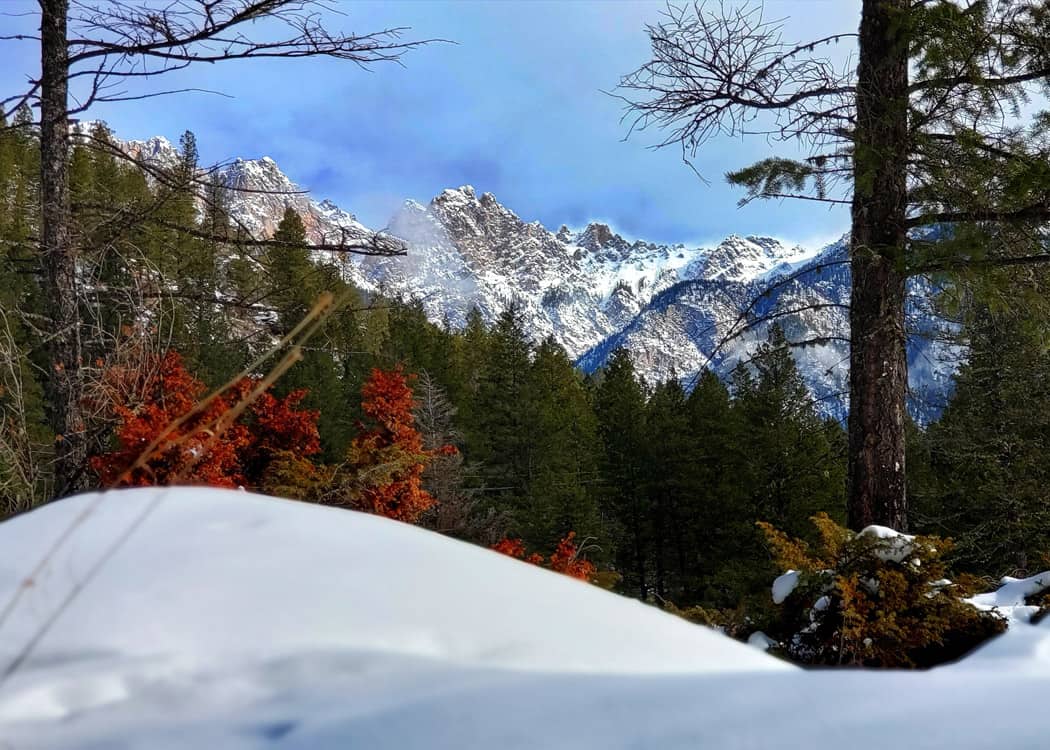
Many of the backcountry trails are safe for exploring in the winter, but due to the risk of avalanches, many of the higher-elevation trails are not.
The park rangers can help guide you to the trails that are safest during your visit.
8. Enjoy the Scenery While You Do Some Fishing
Fishing is definitely a popular pastime while visiting Kootenay National Park.
With the many rivers and streams running through the park, fishing is the perfect way to soak up the incredible views of the Kootenay Mountains.
You can expect to catch kokanee, rainbow and cutthroat trout, dolly varden, burbot, and whitefish.
Just a heads up, though, there is a mandatory catch-and-release order in place in the park, so you can’t keep what you catch.
You will also need a licence to enjoy this activity, although kids who are 16 years of age and under can fish without one.
Check the government website for all the latest information before heading out to the park.
9. Go Looking For the Parks Canada Red Chairs
One of the things our family enjoys when exploring a new National Park is looking for the iconic Parks Canada Red Chairs.
These Muskoka chairs are always placed somewhere with incredible views and are meant for you to stop, relax for a moment, and enjoy the epic scenery.
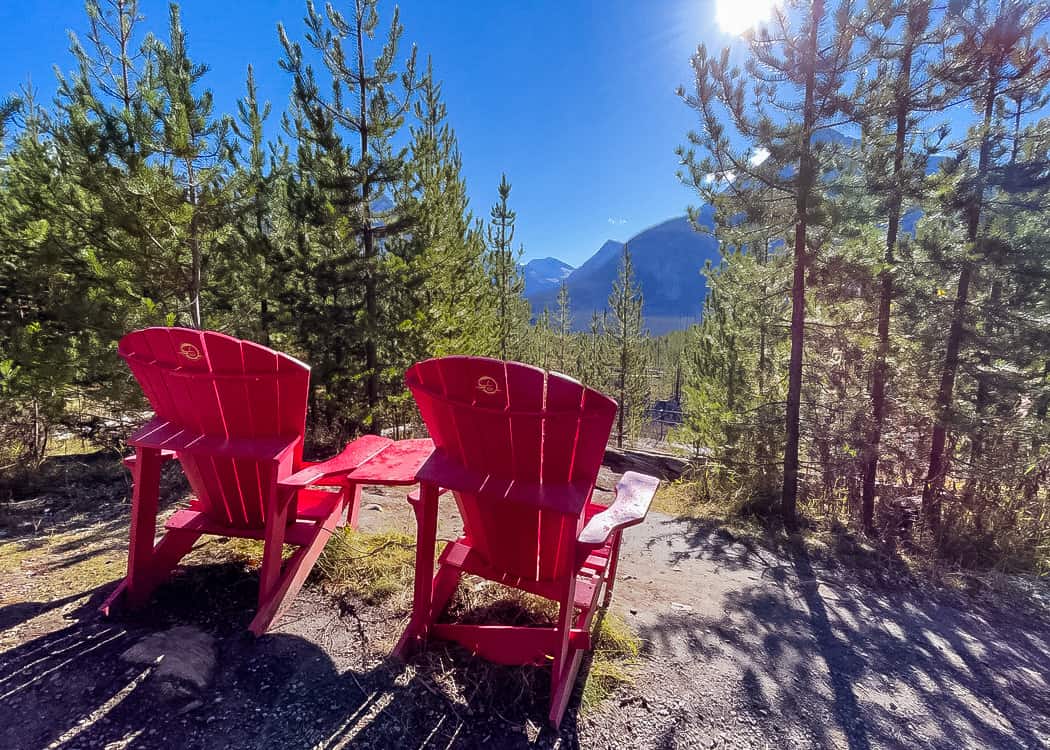
And Kootenay National Park does not disappoint! Two sets of Red Chairs can be found in the park – one at Marble Canyon and the other on the Juniper Trail at Radium Hot Springs.
10. Marvel at the Redwall Fault
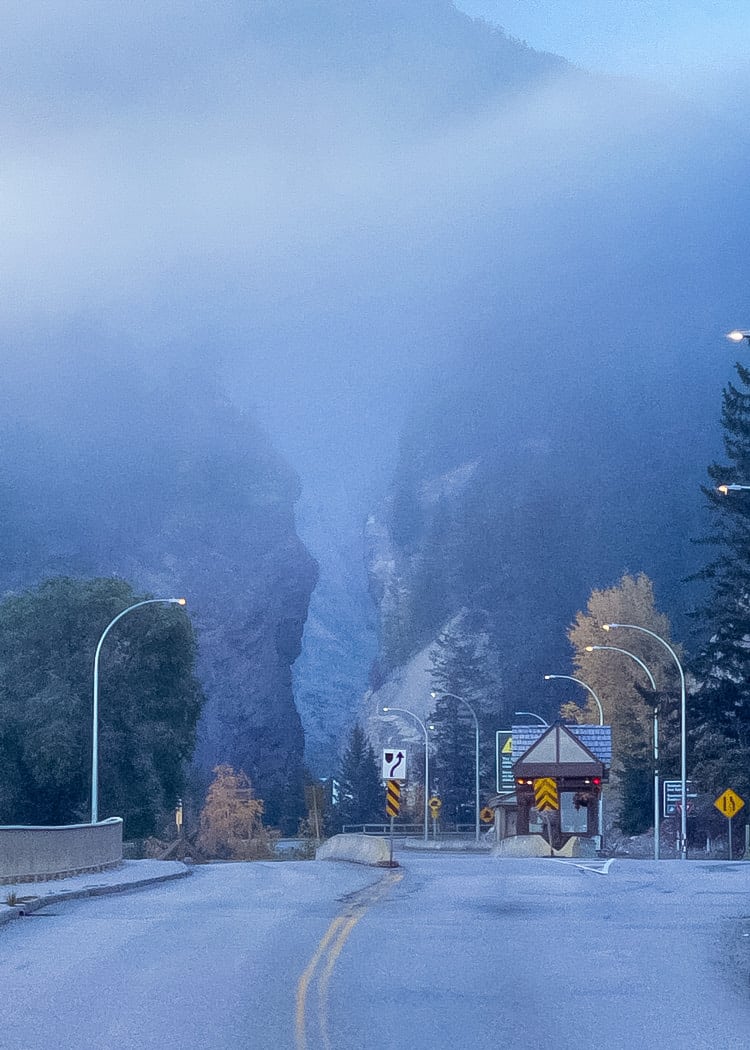
One of the most unique vistas when driving through Kootenay National Park is the Redwall Fault.
Literally, the gateway to the park when coming from the east, the highway travels right through the canyon walls.
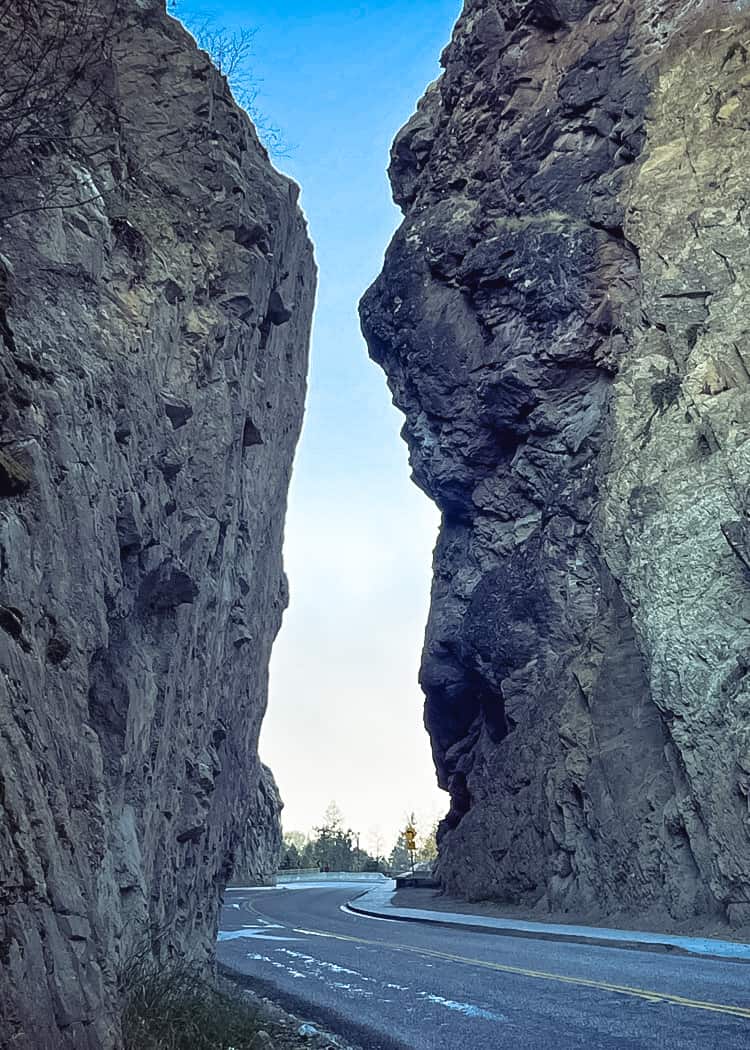
The Redwall Fault is adjacent to the Radium Hot Springs village and is also where you will find the trailhead for the Sinclair Canyon hike.
This incredible formation makes the perfect backdrop to any photo, whether taken from street level or from the peak.
11. Take Your Picture at the Continental Divide
The Continental Divide is an interesting little stop along your drive through Kootenay National Park.
The monument is nearly impossible to miss, with a pull-off area on the side of the highway.
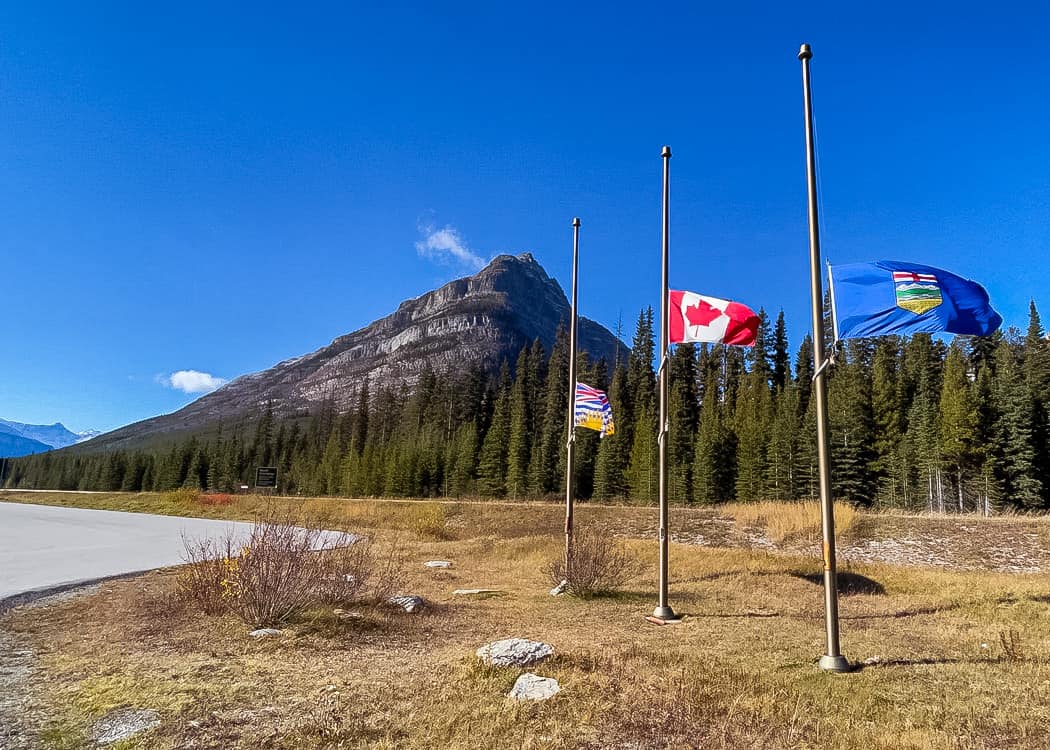
The Continental Divide is significant in that it indicates the border between Kootenay National Park and Banff National Park, as well as the border between Alberta and British Columbia.
More importantly, the Continental Divide also represents the drainage border of Western Canada.
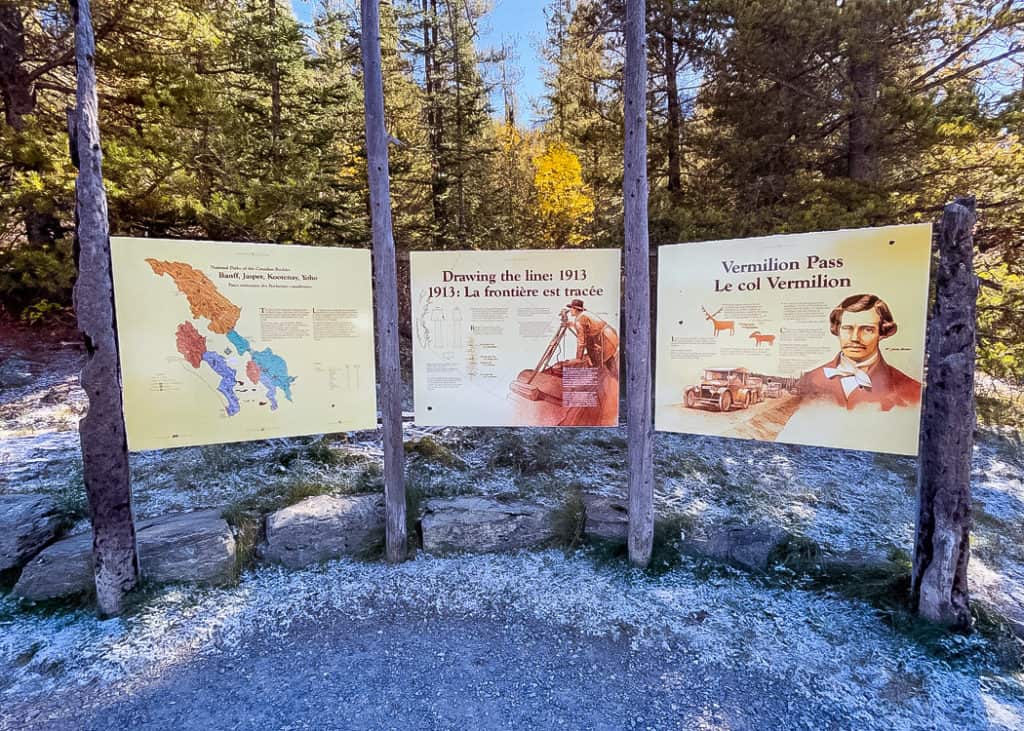
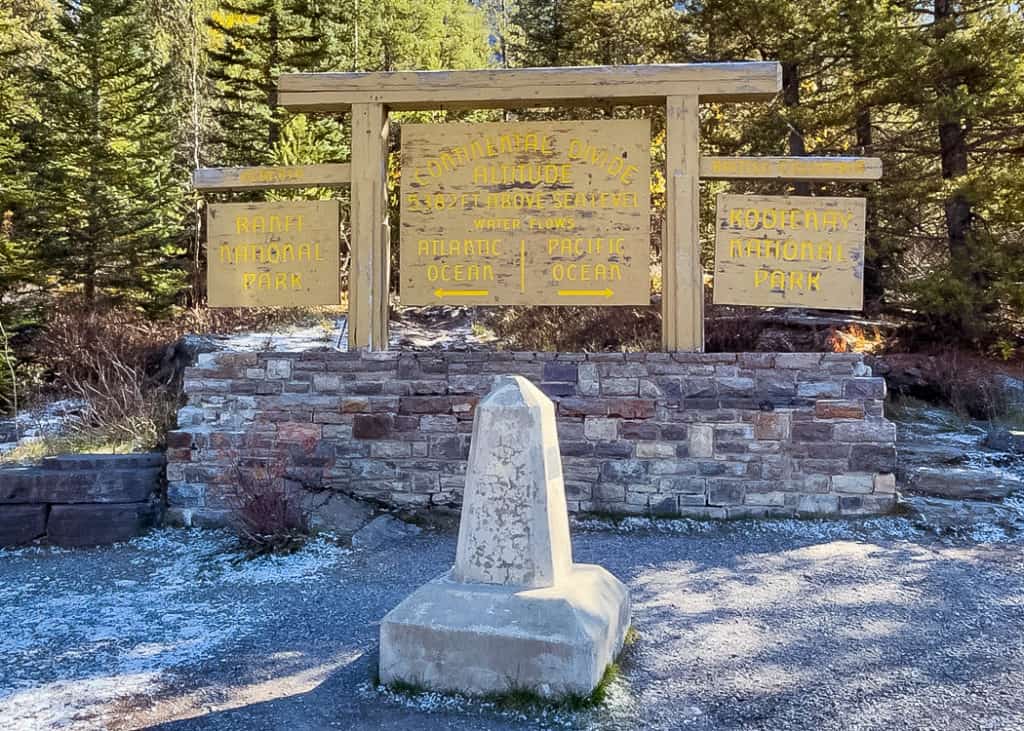
This means that at this point, all waters to the east flow to the Atlantic Ocean, while all waters to the west flow to the Pacific Ocean.
The monument is made up of several interpretive plaques, making this a great spot to learn a little about the area while enjoying the incredible vistas.
12. Search for Wildlife
No trip to Kootenay National Park can be complete without some wildlife spotting.
And with at least 180 species of birds and 57 species of mammals in the park, chances are, you won’t be disappointed!
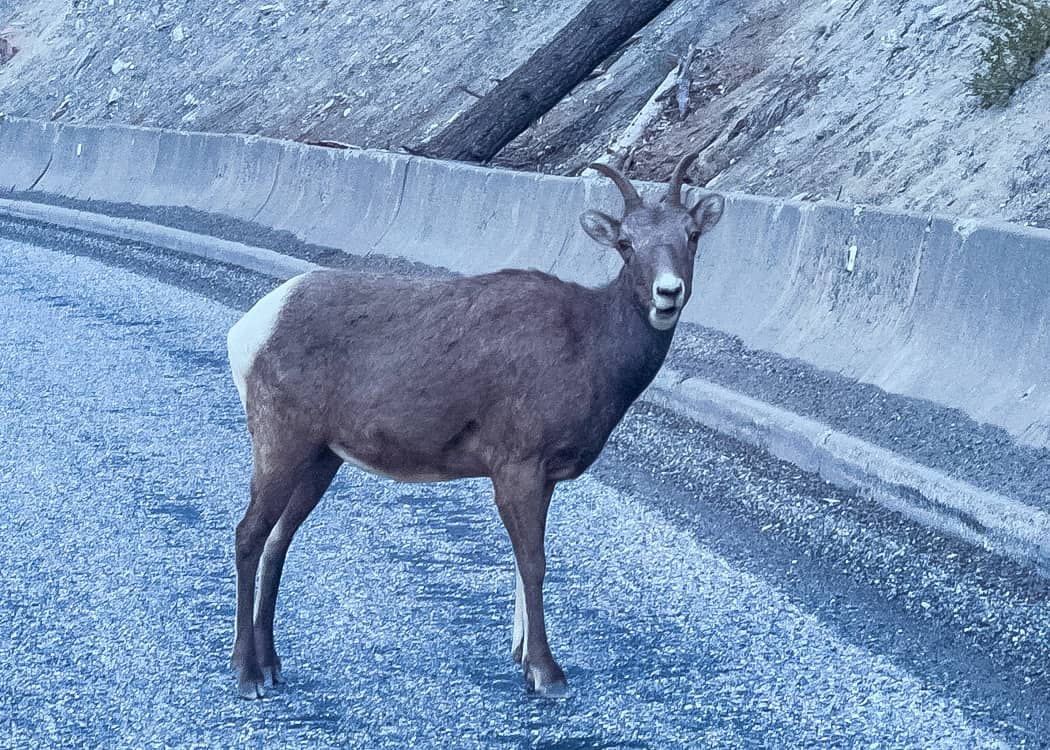
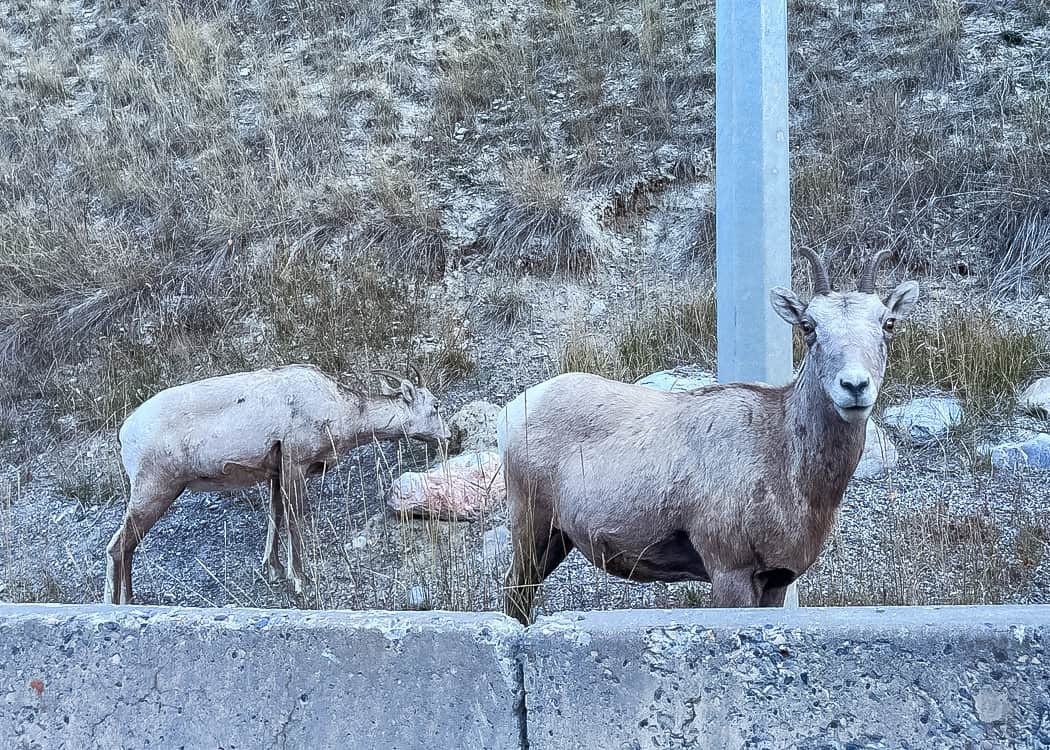
Some of the wildlife that can normally be found within the park include grizzly and black bear, wolf, coyote, cougar, lynx, wolverine, marten, marmot, white-tailed and mule deer, elk, moose, golden-mantled ground squirrels, mountain goat and Rocky Mountain bighorn sheep.
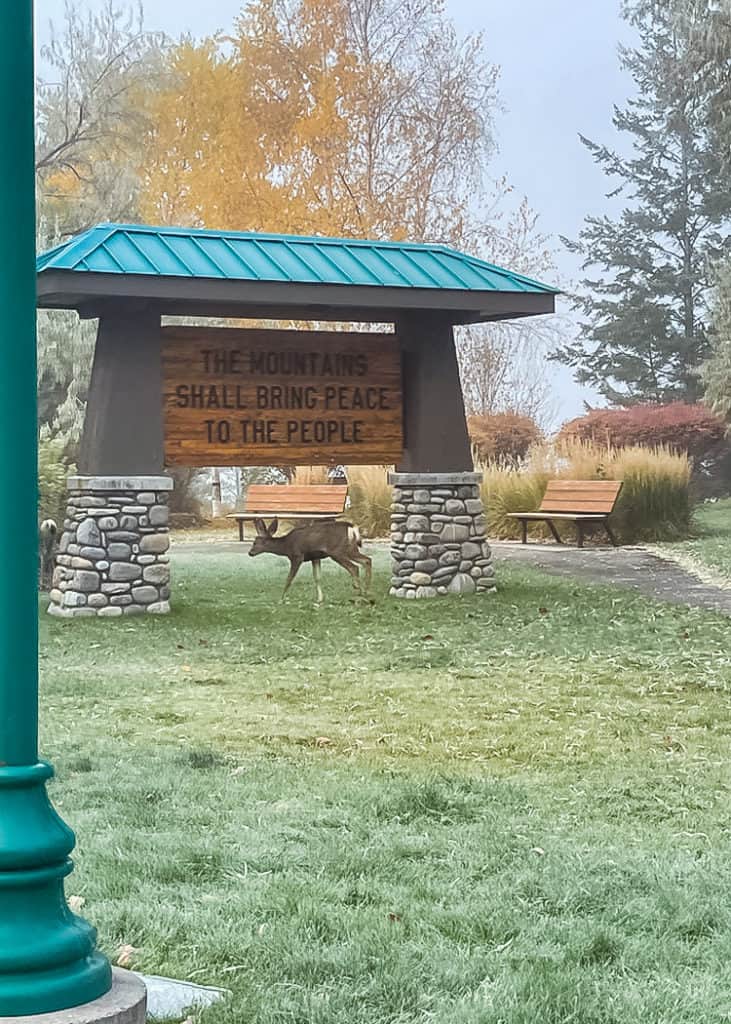
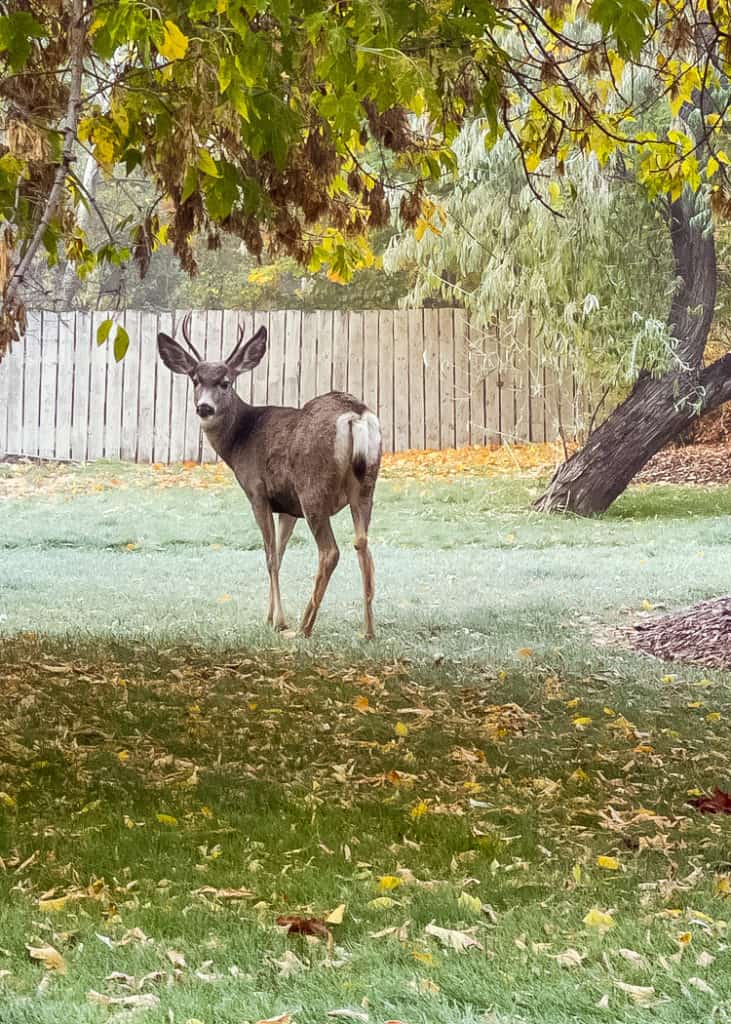
Of course, while viewing wildlife, you need to be respectful. Do not approach or feed wildlife, remain in your vehicle (if you are driving), keep your campsites clean and don’t leave food out.
If you are hiking, make sure you always carry bear spray and stay on designated trails, as the unofficial trails are often used by wildlife.
While driving, be especially vigilant during dusk and dawn, as this is when the wildlife is most active and may wander out onto the roadway.
Search for all tours and excursions available in Kootenay National Park here.
What You Need to Know Before You Go – Kootenay National Park
Before visiting Kootenay National Park, there are several things that you need to know in order to make the most out of your visit.
Do You Need to Pay Admission for Kootenay National Park?
Yes. Any National Park in Canada requires you to pay to get in.
And seeing as how Banff and Kootenay National Parks are right next to each other, it only makes sense to purchase a pass and visit both!
Passes can either be purchased at the gates, or they can be purchased in advance online. For more information, visit the Parks Canada website.
The pass will need to be left on your dashboard while in the parks.
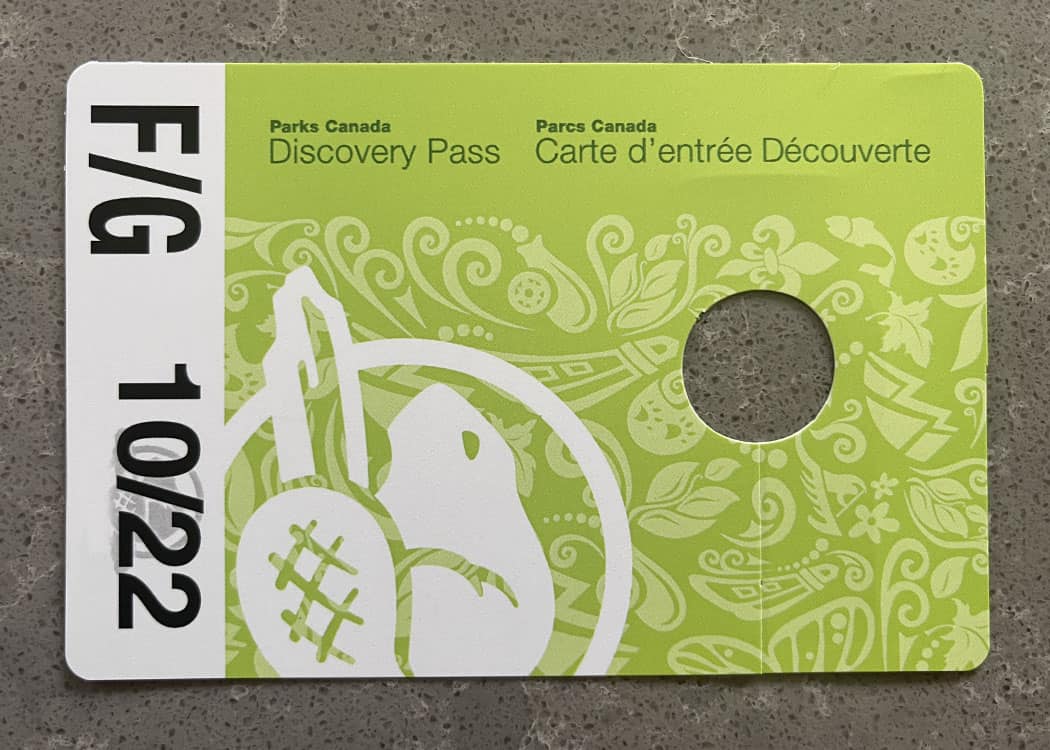
As far as the passes go, you also have a couple of options to choose from:
Purchase a Day Pass
A day pass allows entry into any National Park for one day. The daily passes expire at 4 pm the following day. The cost is:
- Adult: $10.00
- Senior: $8.40
- Youth (up to 17 yo): FREE
- Family/group (up to 7 people): $20.00
- Commercial group (per person): $8.40
Purchase a Discovery Pass
A Parks Canada “Discovery Pass” can be purchased and used for multiple parks and is valid for one full year. The cost is:
- Adult: $69.19
- Senior: $59.17
- Family/group: $139.40
Is There Cell Service in Kootenay National Park?
There’s no cell service in the park. Make sure to download any maps or directions you need before you head out to the park.
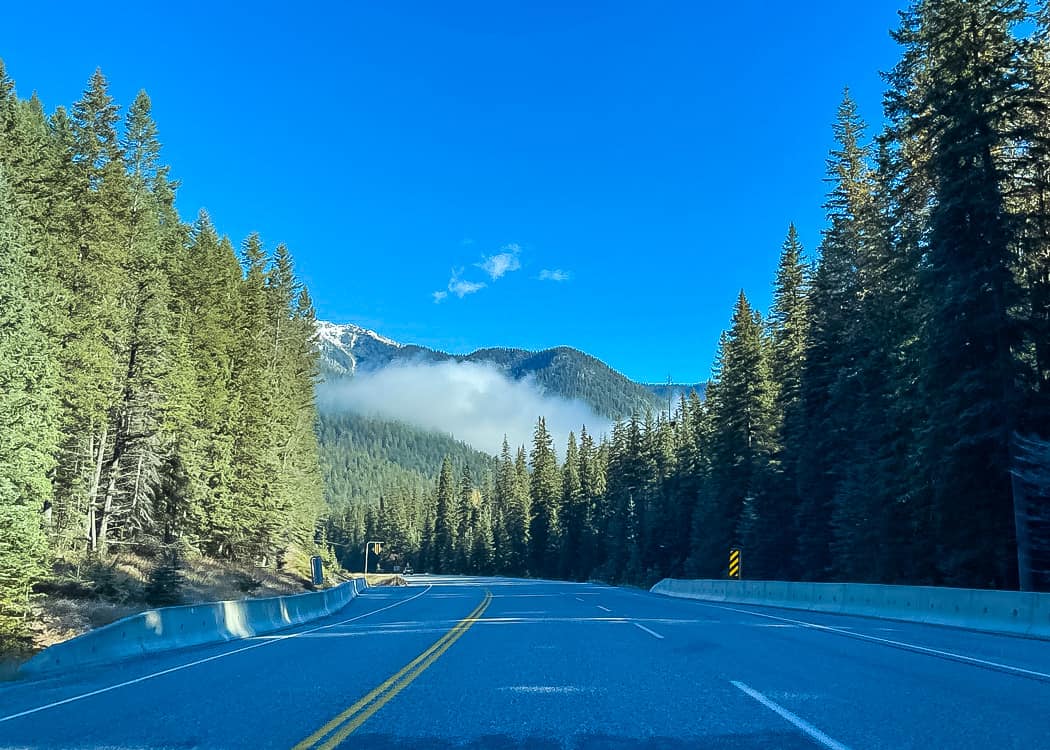
Are There Gas Stations in Kootenay National Park?
Unfortunately, there are no gas stations between Lake Louise and Radium anywhere in Kootenay National Park.
Although the drive from end to end is not a huge distance, your best bet is to play it safe and fuel up beforehand.
Can I Keep a Rock as a Souvenir From Kootenay National Park?
Unfortunately no.
Local laws protect all rocks, fossils, horns, antlers, wildflowers, mushrooms, nests, and any other natural or historic object within the park. Take nothing but photos, and leave nothing but footprints!
Are There Ticks in Kootenay National Park?
Once the weather warms up, you will undoubtedly start finding ticks out on the trails.
Make sure to bring insect repellent out on hikes, and check yourself for ticks when you return.
Are Campfires Allowed in Kootenay National Park?
Campfires are only allowed in campgrounds where fireboxes are provided.
A backpacking stove is required at all the other campsites.
Can I Drink the Water in Kootenay National Park?
Although the water looks absolutely pristine, you should not drink it straight from the rivers.
Always make sure to boil, filter or treat all water before drinking it, as the bacteria found inside can make you pretty sick.
Where Should I Stay in Kootenay National Park?
There are several different options to consider when looking for a place to stay in or near Kootenay National Park.
From camping to Airbnb to Luxury Spa Hotels, the choice is yours depending on what type of trip you are planning.
Camping in Kootenay National Park
Camping is not only an inexpensive option, but your best bet for staying right inside the park.
If you are looking for front-country camping, you have four campgrounds to choose from: Marble Canyon, McLeod Meadows, Crook’s Meadow, or Redstreak.
Each of the four campgrounds offers slightly different amenities, so make sure to do your research before booking your spot.
Most sites include fire pits, flush toilets, and sani-dumps, but some also offer hot showers.
Generally, reservations for campgrounds are available from June to September.
However, some dates cannot be reserved, but instead, operate on a first-come come first-served basis only.
If you are looking for a campground that is close to town and has available amenities, Redstreak Campground is only a 1.6 km walk from Radium.
Redstreak is also only 2.7 km from the Radium Hot Springs Pool if you are looking for a relaxing soak.

Hotels
Although there aren’t actually any hotels or similar accommodations in Kootenay National Park, staying in Radium is a great option if camping isn’t your thing.
Radium is the closest town with direct access to the park and has other amenities you may be looking for as well.
Search for your hotel in Radium here.
You can find a variety of hotels from family-friendly and budget, to luxurious hotels complete with spa facilities.
If you are looking for holiday homes, Radium also has a variety available to choose from.

Where to Eat Near Kootenay National Park?
Unfortunately, there really aren’t any food options inside Kootenay National Park.
Storm Mountain Lodge and Kootenay Park Lodge are both fine-dining options that can be found off the Trans-Canada Highway, just as you are entering the park.
Your best bet for finding a good variety of dining options is to head into Radium.
There you will find everything from cafes to pizzerias, ethnic restaurants, to fine dining.

Some of the places recommended to us by the locals were the Big Horn Café for breakfast, The Old Salzburg Restaurant for delicious and traditional German offerings like schnitzel and spaetzle, the Wildside Pizzeria for some delicious homemade pizza, or Conrad’s Kitchen, for a great burger.
Final Thoughts on Why You Need to Visit Kootenay National Park
Kootenay National Park is an incredible place to visit if you are heading to British Columbia or even Alberta.
The park offers a ton of activities for people looking to spend time outdoors, enjoy some gorgeous vistas, and in general, experience nature in a variety of ways.
Pin This Post for Later!
Related Posts:
- Does it Snow in Vancouver?
- 7 Best Vancouver Food Tours That Your Inner Foodie Will Love
- Why You Should Visit Kootenay National Park Canada
- Top 10 Things to Do in Tofino in Summer
